Text to AI image generation creates images from written descriptions by following programmed steps that interpret words into visual elements. It transforms text instructions into images accurately and quickly, without manual drawing.
Benefits of text to AI image generation include enhancing creativity, saving time and resources, improving engagement and ensuring versatility in usage. It allows users to produce original visuals quickly and adapt them for multiple purposes.
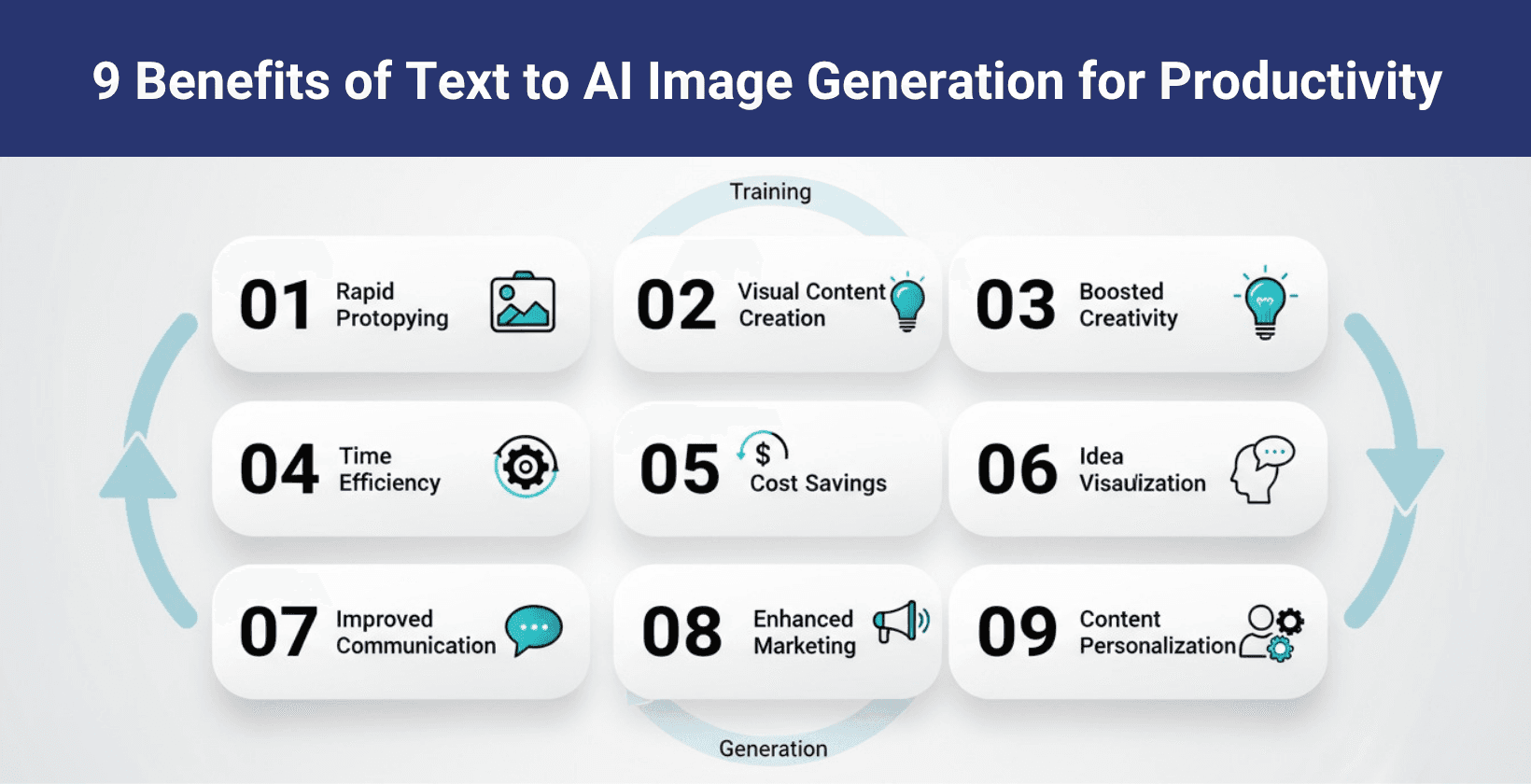
9 benefits of text to AI image generation for productivity are listed below.
1. Enhance creativity
2. Save time and resources
3. Improve engagement
4. Ensure versatility in usage
5. Stay ahead of trends
6. Achieve cost effective customization
7. Integrate easily with existing applications
8. Create unique and complex art forms
9. Bridge imagination and reality
1. Enhance creativity
Enhancing creativity means using text to AI image generation to spark fresh ideas and concepts. This process opens new pathways for creative expression by turning simple descriptions into detailed visual representations. Text to AI image generation rapidly develops original visual content, offers fresh perspectives, breaks traditional creative barriers and encourages experimentation. It follows clear, descriptive text prompts that lead to better results. Text to AI image generation tools like Vosu.ai help users create diverse image styles by keeping prompts specific and varied. They combine data patterns with user input to generate unique visuals suited to their goals.
2. Save time and resources
Text to image AI generation helps teams save time and resources by allowing instant visual creation without expensive equipment or lengthy production cycles. Traditional photoshoots take 2 to 7 days and cost $500 to $5,000, which includes crew, equipment and editing. Text to image generation platforms like vosu.ai generate images in 5 to 30 seconds at $0.05 to $2 per image, which reduces production time by 70 to 90% and costs by up to 95%. Text to AI image generation frees teams from lengthy brainstorming and editing sessions, while lowering reliance on external creative agencies. This speeds up campaign launches while maintaining quality standards, with many companies reporting a reduction in creative production time by nearly half. The result boosts overall productivity and optimizes resource allocation for marketing and design teams.
3. Improve engagement
Improving engagement means increasing interaction and connection between a brand and its audience and providing visuals that maintain brand consistency. Text to AI image generation simplifies creative workflows for faster, on theme output. It adapts images to fit campaign themes targeted at specific audience segments. Text to AI image generation strengthens audience response by delivering relevant, compelling visuals. It boosts emotional ties and retention rates for the brand and improved engagement arises from timely, customized content that resonates well with the target audience. This synergy between creativity and strategy elevates brand impact and campaign success.
4. Ensure versatility in usage
Ensuring versatility in usage means adapting images for different purposes and industries easily. Text to AI image generation ensures versatility in usage by adapting images easily for diverse platforms and formats. It supports simplified content pipelines that speed up production. Text to AI image generation serves diverse industry needs with customized visuals for marketing, design and communication. It integrates smoothly with content management systems to maintain brand consistency across channels. This versatility drives democratization of visual creation, which gives more people access to professional imagery without complex tools and boosts efficiency and agility in content workflows.
5. Stay ahead of trends
Staying ahead of trends means identifying new styles and concepts before competitors do. It gives brands the edge in market responsiveness. Text to AI image generation accelerates trend analysis by processing large amounts of data quickly. It increases creative efficiency by producing fresh visuals without specialized design skills. Content management systems integrate AI outputs to simplify work. Text to AI Image Generation helps teams react to changes instantly, optimizes content strategies and reduces delay in trend adoption. This technology boosts productivity and supports dynamic marketing needs with relevant, timely images.
6. Achieve cost effective customization
Achieving cost effective customization means using text to AI image generation to create customized visuals without high expenses. It uses flexible platforms and usage based pricing to keep costs lower than traditional methods. These AI image generation platforms like Vosu, integrate easily with content management systems, simplifying visual production without adding overhead. Text to AI image generation reduces the need for extensive manual input or costly designer hours while delivering customized visuals for specific needs. This approach lowers overall project costs and improves budget management for businesses focusing on customized visual content.
7. Integrate easily with existing applications
Integrating easily with existing applications means that AI image generation tools can be smoothly and quickly connected to current software, platforms, or workflows without significant changes or extra effort. Text to AI image generation integrates easily with existing applications and fits directly into content management systems. They reduce manual effort and speed up content production. Text to AI image generation uploads images automatically to websites. It supports various platforms including CMS like WordPress and Adobe Experience Manager. Text to AI image generation connects with marketing tools for quick image deployment. They simplify workflows and maintain brand assets in one place. This integration improves overall efficiency and reduces time spent on image handling. Vosu is the perfect example of integrating easily with existing applications.
8. Create unique and complex art forms
Creating unique and complex art forms in text-to-AI image generation refers to the process where generative AI models transform detailed, imaginative textual prompts into original, visually intricate artworks. Headshotly.ai exemplifies this by generating hyper realistic, abstract, creative artsy, mythical hero, cyberpunk, Ghibli, cosplay and RPG character styled images. Text to AI image generation combines deep learning models with a blend of artistic styles. It transforms simple prompts into visuals displaying new creative dimensions. Its users experience a rapid creative process that eliminates traditional art limitations. It pushes boundaries and explores innovative visual expressions. Text to AI image generation redefines creative capabilities and inspires artistic breakthroughs.
9. Bridge imagination and reality
Bridging imagination and reality means turning abstract, creative ideas described in words into tangible, visual imagery using artificial intelligence. Text to AI image generation bridges imagination and reality by transforming descriptive text prompts into visual content. It accelerates creative iterations by closing the imagination production gap quickly. Text to AI image generation uses machine learning models to interpret text and produce tangible images. These models link ideas with visual outcomes, which spreads the journey from concept to creation. Text to AI image generation reduces the gap between thought and production by offering precise outputs. It pushes creative boundaries by turning words into clear, realistic visuals. This process shortens the time to realize ideas while maintaining originality and clarity.
What are the challenges of text to AI image generation?
The challenges of text to AI image generation include issues with text and symbol accuracy, bias and lack of diversity and ethical concerns. These factors hinder creativity, limit innovation and raise concerns about fairness, accountability and content misuse.
The challenges of text to AI image generation are given below.
- Text and symbol generation: AI images contain gibberish text output and inaccurate symbols due to limited understanding of character details, which causes accuracy issues in visuals.
- Bias and diversity: AI text-to-image generation limitations reveal biases from training data, which leads to less diversity and perpetuation of stereotypes in generated images.
- Ethical concerns: AI images raise ethical questions regarding copyright, misrepresentation and usage rights, without clear regulation and standards in place.
- Technical limitations: AI text-to-image generation performance is restricted by computational resource demands and difficulty in producing detailed, high quality images.
- Generic and unoriginal outputs: AI often replicates existing concepts, which limits innovation and causes repetitive or generic visual results.
- Lack of regulation and standards: AI text-to-image generation faces significant challenges due to a lack of regulation and standardization, resulting in legal, ethical, and technical uncertainties for creators, businesses, and policymakers.
- Difficulty in achieving desired quality standards: AI text-to-image generation faces challenges in meeting high quality standards due to limitations in accurately rendering details, handling complex compositions, and maintaining logical consistency in visuals.
What are the controversies with AI image generation?
The controversies of AI image generation are given below.
- Copyright: AI image generation raises copyright concerns over unauthorized use of artists' works, leading to legal battles over ownership and data rights, impacting creative industries and devaluing artistic work.
- Plagiarism: AI image generation replicates styles without credit, which leads to accusations of plagiarism and disputes about originality and respect for human artists' work.
- Impact on human artists: AI image generation affects human artists by reducing job opportunities and threatening livelihoods as AI tools replace traditional roles.
- Transparency: AI image generation faces transparency issues, as users struggle to understand the processes behind the images, limiting control and trust.
- Lack of control: AI image generation can lead to a lack of control over outputs, potentially resulting in misleading or harmful images and raising ethical and social concerns.
- Corporate and public backlash: AI image generation sparks corporate and public backlash, with calls for regulations and bans due to fears of cultural erasure and unfair competition in the art world.
Can AI images be copyrighted?
No, AI images can not be copyrighted under current law because copyright law requires human authorship and creative involvement. It excludes works created without meaningful human input. Human creative involvement and authorship determine ownership and eligibility for protection under copyright law.
Why does AI struggle with text in images?
AI struggles with text in images due to tokenization limitations, which leads to errors in spelling and spacing. Insufficient training data for text causes poor accuracy. Lack of language understanding prevents correct symbol interpretation and these factors degrade text quality in AI generated images.
Can ChatGPT create text to AI images?
Yes, ChatGPT can create AI images from detailed descriptions and supports multi turn image refinement for conversational image creation. Paid subscription requirement restricts full access to advanced features. ChatGPT uses clear prompts to generate and update images, which allows users to naturally interact with the AI to refine visuals step by step.
Which AI is the best for text to image generation?
The best AI for text to image generation is given below.
- Vosu.ai: Vosu interprets complex text prompts precisely and integrates creative tools smoothly. It supports advanced aesthetic customization while prioritizing commercial safety for generated images.
- DALL E 3: DALL E 3 handles long, detailed queries with ease and edits images through simple commands. It adapts styles effectively while maintaining high standards for image use rights.
- Midjourney: Midjourney excels at artistic image generation and offers customizable output resolutions. It learns user preferences over time but lacks certain commercial safety guarantees.
- Adobe Firefly: Adobe Firefly integrates deeply with Adobe Creative software and applies precise aesthetic adjustments. It generates text effects inline and ensures legal compliance for commercial use.
- DreamStudio: DreamStudio uses advanced algorithms for detailed visuals and provides real time image customization. It supports diverse style presets and includes protections for safe image licensing.