AI video refers to video made or changed by smart computer programs that learn from examples, understand instructions and create or edit images without direct human control. AI video works by utilizing pre trained models that understand context, motion and visual elements like background, color and movement to generate frames that replicate human like video sequences. AI video uses deep learning, computer vision, natural language processing and generative adversarial networks (GANs) to mimic real life visual storytelling.
AI video types include text to video, image to video and video to video, with capabilities such as synthetic avatars, deepfake creation and video upscaling. AI generates video with popular tools such as Runway, Synthesia and Google Veo, which assist in different types of content creation like explainer videos, educational material and realistic digital avatars.
AI video serves use cases in marketing, e learning, entertainment and personalized content creation. It helps optimize production, reduce costs and make video content creation accessible to users without technical skills or professional equipment.
What is AI video?
AI video is a video created by artificial intelligence that analyzes visual features, text scripts and media inputs to generate content.
AI video uses machine learning, computer vision, video editing, scene selection, visual effects and natural language processing to automate video creation. AI converts scripts into voiceovers, adds subtitles and personalizes content at scale. AI video matters because it makes video production faster, cost effective and scalable, which enables creators and businesses to produce high quality, customized videos without needing advanced technical skills or large budgets.
How does AI video work?
AI video works by neural networks, diffusion models and natural language processing to create or edit video content based on user input. The AI first learns from massive datasets of images and videos to understand how scenes, movements and objects work together. When a user enters a prompt, the AI generates a video frame by frame and makes it smooth motion and consistent scenes through methods like diffusion or sequential frame prediction.
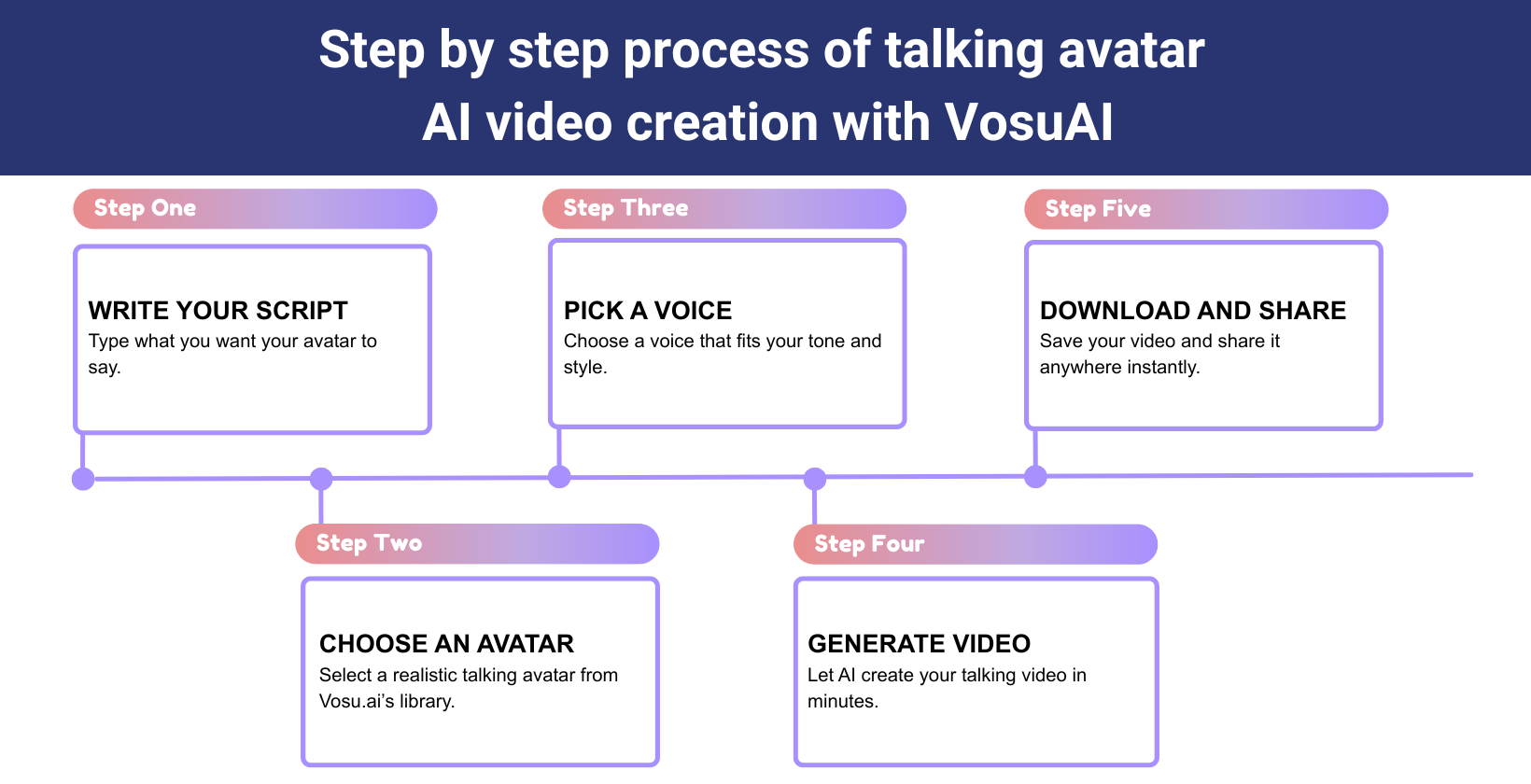
AI also handles tasks like turning scripts into voiceovers, generating subtitles, creating digital avatars and adding visual effects. Platforms like Vosu.AI let users enter a script, pick an avatar and instantly produce a professional talking head video without filming or editing. AI makes video production faster, affordable and more scalable for creators and businesses.
What are the common technologies behind AI video?
AI video technologies use advanced systems like machine learning, computer vision, diffusion models and natural language processing that help create, edit and improve video content automatically.
The technologies behind AI video are given below
- Machine learning algorithms
- Deep learning (neural networks)
- Computer vision
- Natural language processing
- Diffusion models
- Video recognition systems
- Image to video and text to video synthesis tools
- Automated video enhancement and upscaling technologies
The image below shows the key technologies behind AI video creation.
What are the types of AI video?
There are three types of AI video, which are text to video, image to video and video to video.
Three types of AI video are explained below.
- Text to video: AI generates videos directly from written prompts or detailed scripts in the form of text to video, allowing users to turn ideas or narratives into visual content without manual video production.
- Image to video: AI transforms static images into full video sequences through image to video, where the AI creates motion, transitions and storytelling elements based on the visual input.
- Video to video: AI modifies existing video footage in video to video processes, where the AI enhances quality, changes visual styles, adds effects, or even translates scenes while keeping the original structure intact.
What are the popular AI video tools?
Synthesia, Runway, OpenAI Sora, Pika. Google Veo, Canva Magic Studio, Vosu.ai, Hailuo AI, Adobe Firefly, Luma Dream Machine, Veed, Colossian, Elai.io and Wisecut are popular AI video tools.
The popular AI video tools are listed below.
- Synthesia
- Runway
- OpenAI Sora
- Google Veo
- Vosu.ai
- Hailuo AI
- Luma Dream Machine
- Canva Magic Studio
- Veed
- Kling AI
- InVideo
- Pictory
- Colossian
- Elai.io
- Wisecut
What are the use cases of AI video?
AI video is used for marketing, education, training, content creation and social media videos.
The use cases of AI video are given below.
- AI video delivers personalized advertisements and dynamic product showcases in marketing and advertising. AI video helps brands engage customers with content customized to individual interests, behaviors and demographics.
- AI video creates interactive lessons, onboarding sessions and e-learning modules in education and training. It allows educators to offer rich, customized content that suits each learner’s pace and needs.
- AI video automates edits, adds special effects and recommends content in entertainment. AI video produces polished content quickly and helps viewers find what they enjoy most.
- AI video generates internal updates, CEO messages and policy guides in corporate communications, which companies keep messaging clear and consistent across all departments.
- AI video provides tutorials, answers common questions through visual guides and uses virtual agents in customer service, which improves response speed and clarity for customer support.
- AI video creates product demos, personal sales pitches and training content for sales enablement. It equips sales teams to deliver stronger presentations and close deals with confidence.
- AI video delivers real time updates, produces content in multiple languages and supports broadcasters in news and sports, which maintains speed, accuracy and audience reach.
- AI video detects suspicious activity, identifies faces and sends alerts in surveillance and security, which improves safety through faster and more accurate monitoring.
- AI video produces surgical training content, supports diagnostics and explains health information in healthcare. It helps patients and professionals achieve better outcomes.
- AI video generates short form videos, adds effects and maintains high content output in social media. It supports creators who aim to grow their audience and stay active online.
- AI video creates recruitment campaigns, onboarding videos and policy guides in human resources, which improve communication, speed up hiring and support employee training.
- AI video builds realistic scenes and interactive content in virtual and augmented reality, which enhances experiences for training, entertainment and simulation across industries.
What are the benefits of AI video?
The benefits of AI video are faster creation of high quality videos, lower production costs through automated tasks and the ability to produce professional content without needing expert skills.
The benefits of AI video are given below.
- AI video boosts efficiency in content creation by handling repetitive tasks automatically. It allows creators to focus more on strategy and creativity rather than manual labor.
- AI video reduces production costs and eliminates the need for large production teams, professional studios and expensive equipment, which makes high quality content creation more accessible.
- AI video improves final output quality through built in features such as automatic color correction, background noise removal and video stabilization. These features ensure a more professional look.
- AI video enables fast and scalable video production across industries like marketing, education and social media. It helps businesses meet rising content demands without delays.
- AI video personalizes content for different audience segments and translates dialogue, generates subtitles and adds voiceovers to enhance global reach and relevance.
- AI video offers intuitive interfaces and ready made templates and guides users step by step and makes video creation easy for those without technical skills or editing experience.
- AI video allows creators to test and apply a wide range of styles, visual effects and storytelling techniques. It encourages innovation and experimentation in visual content.
- AI video provides real time insights and performance data and helps creators refine their videos to better align with viewer interests, preferences and behaviors.
- AI video accelerates editing and post production and assembles footage, applies transitions and finalizes output to ensure faster turnaround times.
- AI video helps businesses and creators produce more videos with higher ROI and stronger audience engagement.
How does AI video production benefit the film industry?
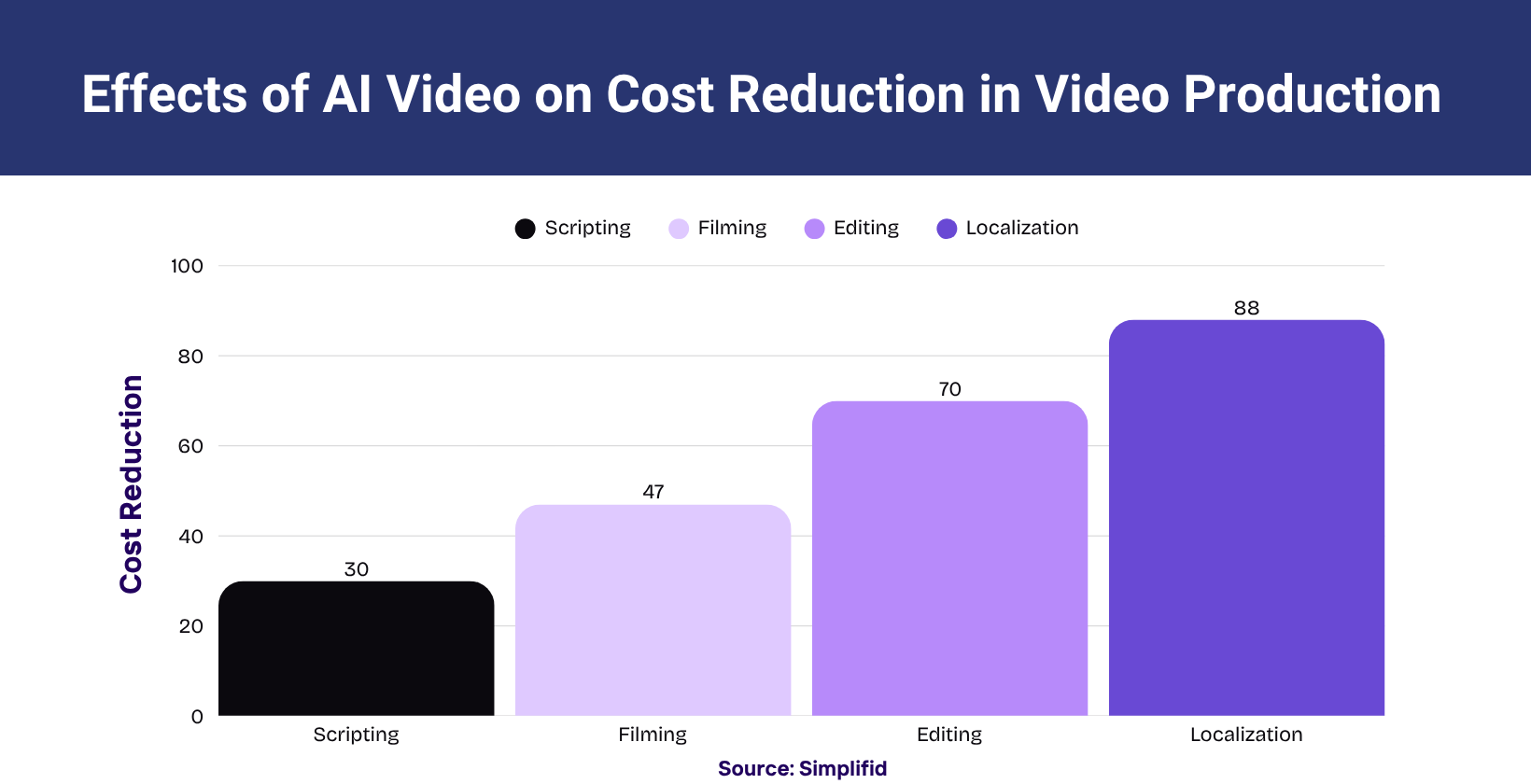
AI video production helps the film industry by boosting pre production with AI generated storyboards and script analysis, automating complex visual effects and enhancing editing with automated color grading, scene selection and sound design. AI video production tools reduce costs, speed up production, boost creative freedom and allow filmmakers to experiment with new techniques. This makes high quality filmmaking more accessible and efficient for both large studios and independent creators.
The image below illustrates the effects on cost reduction in video production, which shows positive impacts of AI in the film industry.
What is diffusion model?
A diffusion model adds noise to a dataset and then learns how to remove that noise to recreate clear and realistic content. The diffusion model follows two main steps such as in forward diffusion, it adds noise to the data and in reverse diffusion, it removes the noise to recover the original structure.
What are the use cases of computer vision?
The use cases of computer vision are in healthcare, manufacturing, self driving cars, retail analytics and security systems.
5 use cases of computer vision are listed below.
- Medical imaging analysis: Computer vision helps doctors detect diseases, tumors and abnormalities in medical images such as X rays, MRIs and CT scans.
- Quality control in manufacturing: Computer vision inspects products for defects, measures components, quality standards, reduces errors and improves productivity in manufacturing.
- Security and surveillance: Computer vision enables real time monitoring, performs facial recognition and detects threats in public spaces, workplaces and retail settings to enhance security and safety.
- Autonomous vehicles and transportation: Computer vision allows self driving vehicles to recognize objects, detect lane markings and navigate roads safely without human intervention.
- Agriculture and plant disease detection: Computer vision identifies crop diseases early, monitors plant health and helps farmers increase yield and reduce agricultural losses.
What is text to video AI?
Text to video AI is a technology that uses artificial intelligence to generate videos from textual descriptions or prompts, automating the process of video creation without manual filming or editing. AI analyzes the input text and understands its context and intent. It then uses diffusion models, GANs, or transformers to create video frames, add visuals, transitions, voiceovers and subtitles that match the script’s content and mood.
What is the best AI video generator?
The best AI video generator is vosu.ai, which stands out for offering several advanced models like Runway, Veo, Kling AI, Sora and minimax to suit different creative needs. Vosu.ai differs by providing a user friendly interface, cinematic video quality and scene consistency, which makes it ideal for both animation and realistic content generation for various use cases.