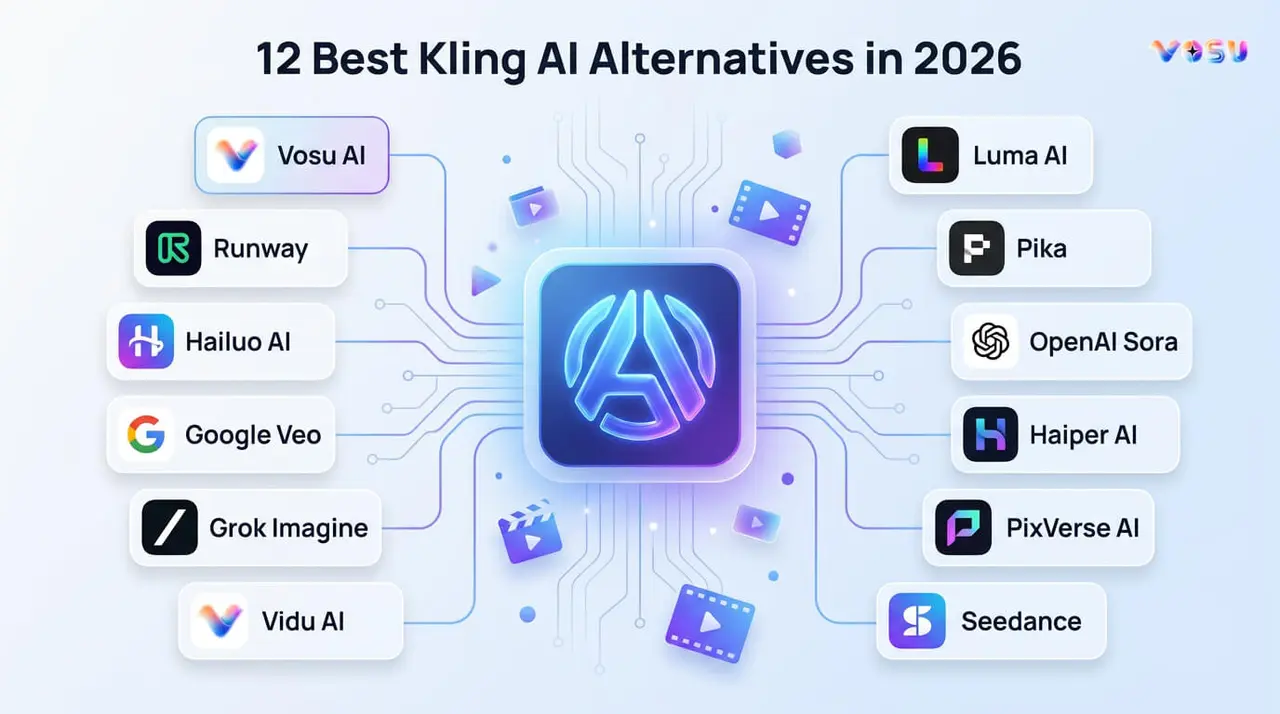
The best Kling AI alternatives are Vosu AI, Runway, Hailuo AI, Google Veo, Grok Imagine, Vidu AI, Luma AI, Pika AI, PixVerse AI and Seedance. They offer advanced AI video generator features, cinematic visuals and flexible AI video generation workflows similar to Kling AI. Vosu AI is considered a leading Kling alternative AI video platform launched in 2025 that integrates over 100 video models like Veo Seedance, Hailuo and Pika. It allows text to video image to video and video to video generation for scalable multi model creative production under a single subscription.
Runway is popular for filmmaking and creative editing, while Hailuo AI is known for realistic motion and smooth cinematic output. Google Veo delivers high quality storytelling with accurate prompt results and synchronized audio, whereas Grok Imagine focuses on fast video generation with built in sound design.
Vidu AI is recognized for strong character consistency and multimodal video creation, while Luma AI produces realistic motion and immersive visual quality. Pika AI and PixVerse AI are widely used for short form social media videos and creative effects, while Seedance supports advanced AI animation platform workflows and video automation.
The 12 best Kling AI alternatives are listed below.
1. VosuAI
2. Runway
3. Hailuo AI
4. Google Veo
5. Grok Imagine
6. Vidu AI
7. Luma AI
8. Pika
9. OpenAI Sora
10. Haiper AI
11. PixVerse AI
12. Seedance
1. Vosu AI
VosuAI is designed for creators who need more than a single flagship video model and prefer a complete production environment instead. It was launched in 2025 and then updated its mobile version in 2026. It integrates over 100 advanced video models such as Pika AI, Google Veo, Seedance, PixVerse, and Hailuo, alongside Kling models. It offers text to video, image to video and video to video generation, along with prompt enhancer and PromptGPT.
VosuAI is widely used by creators, brands, filmmakers, influencers and UGC marketers who need fast and scalable content production. It provides high flexibility, multi model access, strong prompt control, and scalable creative output for professional workflows. Its limitations include generation credits, rendering times, model specific restrictions and varying output quality depending on prompts. Users can also access most popular Kling AI alternatives directly through VosuAI under a single subscription.
2. Runway
Runway is a creative AI platform that helps users generate and edit videos using text prompts, images and existing footage. It launched in 2018 and became a leading tool for generative media and visual storytelling. It features models like Gen 1, Gen 2, Gen 3 Alpha and Runway Gen 4, which support modern AI video generator workflows. It also offers text to video creation, motion tracking, image animation and advanced editing tools for video generation AI projects and cinematic AI video production.
Runway is widely used for filmmaking, marketing, music videos and social media content because of its fast rendering speed and high quality visuals. It provides flexible creative control, cloud based access and an intuitive interface for beginners and professionals. It may still produce inconsistent details in complex scenes and advanced features often require expensive subscription plans. It can also be accessed through VosuAI for more flexible AI video creation workflows.
3. Hailuo AI
Hailuo AI is an AI powered video generation platform developed by MiniMax for creating videos from text prompts and images. It launched in September 2024 and quickly became popular for its realistic visual quality and smooth motion generation. It includes models like Video-01, I2V 01, S2V 01, Hailuo 02, and Hailuo 02 Pro, which support realistic AI motion, cinematic camera control and character consistent animation. It offers text to video creation, image to video generation, motion control and AI rendering for producing high quality videos and creative storytelling content.
Hailuo AI is widely used for filmmaking, marketing campaigns, social media content and viral short videos because of its fast rendering speed and cinematic visual output. It provides strong motion realism, beginner-friendly controls and impressive character animation quality for creators. It may still struggle with scene consistency in complex generations, while free users can experience slower rendering during peak demand. It can also be accessed through VosuAI for more flexible AI video creation workflow
4. Google Veo
Google Veo is an advanced AI video model developed by Google DeepMind for generating realistic videos from text and image prompts. It launched in May 2024 during Google I/O and became one of the leading tools for AI generated media. It includes models like Veo, Veo 2, Veo 3, and Veo 3 Fast, which support cinematic scene generation, realistic motion and synchronized audio creation. It also offers camera control, image to video generation, prompt based editing and advanced storytelling tools for cinematic AI video projects and AI filmmaking workflows.
Google Veo is widely used for filmmaking, advertising, marketing campaigns and creative social media production because of its realistic visuals and high prompt accuracy. It provides strong motion consistency, native audio generation and high quality output for creators using a text to video model. It still requires premium access for advanced features and highly realistic generation raises concerns about misinformation and the misuse of deepfakes. It can also be accessed through VosuAI, where users can use Veo’s top models directly within a more streamlined video creation workflow.
5. Grok Imagine
Grok Imagine is an AI video generation feature developed by xAI that creates short videos from text prompts or static images with built-in audio generation. It launched in 2025 and later received major updates in 2026 that improved resolution, motion quality and generation speed. It supports text to video creation, image to video conversion, scene control, voice generation and synchronized audio for realistic video output. It also includes AI video customization tools for adjusting style, pacing and visual effects for more creative control over generated clips.
Grok Imagine is widely used for social media content, marketing creatives, storytelling and fast rendered clip production because of its rapid output and strong prompt understanding. It delivers smooth motion, automatic sound design and quick iteration for creators working on short form content. It faces limitations in long form generation, content moderation constraints, and occasional inconsistencies in complex scenes. VosuAI integrates Grok Imagine into a unified workflow that allows users to generate, compare and refine AI videos from multiple models in one platform.
6. Vidu AI
Vidu AI is a multimodal AI video generation platform developed by ShengShu Technology for creating videos from text prompts and multiple reference images. It launched in April 2024 and gained attention for improving consistency in AI generated storytelling. It includes models such as Vidu 1.5, Vidu 2.0, Vidu Q1, Vidu Q2 and Vidu Q3, which focus on stronger character consistency, smoother motion and better scene alignment across frames. It also supports multimodal artificial intelligence video generation that allows users to combine text, images and references for controlled outputs.
Vidu AI is widely used for AI storytelling videos, filmmaking, advertising and social media content because it maintains character consistency and supports multiple reference images for coherent scenes. It offers fast AI rendering, strong prompt adherence and flexible creative control for creators. It offers stable character generation, improved continuity and high quality outputs, while it struggles in occasional motion artifacts and reduced control in highly complex scenes. VosuAI integrates Vidu AI’s top models into a unified workflow, allowing users to generate and refine videos more efficiently.
7. Luma AI
Luma AI is a video animation AI platform that creates realistic videos and 3D content from text and image prompts. It launched its Luma AI Dream Machine in June 2024 as its main tool for generative video creation. It uses the Ray model family that includes Ray 1, Ray 2, Ray 3 and Ray 3.14 to improve motion quality, realism and AI rendering performance. It offers features like text to video generation, image to video conversion, camera control, video extension and prompt based scene editing to support creative workflows.
Luma AI is widely used for filmmaking, advertising, social media content creation and pre-visualization because it produces high quality realistic motion for cinematic results. It provides fast generation speed, strong visual realism and flexible video animation AI tools that help creators iterate quickly. It has some limitations such as short video length, occasional motion inconsistencies and restricted access to advanced features under paid plans.
8. Pika
Pika is an AI video generation platform that creates and edits videos from text prompts and images using its Pika AI video creator system. It launched in 2023 and quickly became popular for short form AI video production with fast, creative outputs. It offers models such as Pika 1.0, Pika 1.5 and Pika 2.0, which improve motion quality, realism and editing flexibility over time. It offers text to video generation, image to video conversion, motion control and special effects tools known as Pikaffects, along with performance focused rendering improvements called Pikaformance.
Pika is widely used for social media content, marketing, memes and creative storytelling because it is optimized for short-form AI video creation and fast experimentation. It delivers quick rendering, easy to use controls, and strong creative effects for beginners and creators. It produces inconsistent details in complex scenes, limited long video support and variability in motion quality. VosuAI integrates Pika’s top models into a unified workflow that allows users to generate, edit and compare videos efficiently.
9. OpenAI Sora
OpenAI Sora is a text to video AI model developed by OpenAI that generates cinematic videos from text prompts and images for AI video generation, AI storytelling and cinematic AI video workflows. It was first announced in February 2024 and released in December 2024 to limited users. It includes versions such as Sora, Sora 2 and Sora 2 Pro, which improve realism, motion quality and video coherence over earlier releases. It supports text to video AI creation, image to video generation, scene extension and physics based motion simulation for realistic outputs.
OpenAI Sora is widely used for filmmaking, advertising, concept design and short form storytelling because it produces high quality cinematic videos with strong visual realism. It offers smooth motion consistency, strong prompt understanding and advanced cinematic output quality. It has limited access, high computational cost, short video duration limits and risks of misuse such as deepfakes. VosuAI brings together Sora video generation models into a single workflow, allowing users to create AI videos.
10. Haiper AI
Haiper AI is a generative AI video platform that works as an AI video generator for creating videos from text prompts, images and existing video inputs. It launched in early 2024, with public access and wider attention beginning around March 2024. Its top models are Haiper 1.0, Haiper 1.5 and Haiper 2.0, which improve realism, motion quality and generation speed across versions. It supports features like text to video generation, image to video animation, video repainting, video extension and enhanced AI rendering for smoother outputs.
Haiper AI is widely used for social media content creation, marketing, concept visualization and short form storytelling due to its fast generation and flexible creative tools. It offers ease of use, quick rendering and accessible video creation for beginners. It has some disadvantages such as short output limits, occasional motion inconsistencies and reduced control compared to more advanced cinematic AI video platforms.
11. PixVerse AI
PixVerse AI is a generative AI platform that works as an AI video generator for creating short AI videos from text prompts, images and reference inputs. It launched globally in 2024, with wider adoption growing through 2025 as it introduced successive model upgrades. It includes models such as PixVerse V5, V5.6, V6 and C1, which improve motion quality, realism and multi shot video generation over time. It supports text to video generation, image to video creation, AI visual effects, video repainting and video extension for continuing or modifying scenes using AI rendering.
PixVerse AI is widely used for AI short videos, marketing content and creative storytelling because it produces fast, visually engaging results with strong cinematic effects. It offers quick rendering speed, easy creative controls and strong support for AI visual effects that help creators produce viral content. It still has some limitations like inconsistent motion in complex scenes, limited long form video capability, and reduced fine control compared to high-end cinematic tools. VosuAI integrates PixVerse AI models into a unified workflow so users can access and experiment with its top versions more efficiently in one platform.
12. Seedance
Seedance is a multimodal AI video generation platform developed by ByteDance that supports AI animation platform workflows and video automation for creators. It launched in June 2025, with Seedance 2.0 released in February 2026 as a major upgrade for multimodal video generation. It includes models such as Seedance 1.0, Seedance 1.5 Pro and Seedance 2.0, which improve motion stability, realism and character consistency over time. It supports text to video generation, image to video creation, multi shot storytelling, reference based scene control and AI rendering with synchronized audio.
Seedance is widely used for filmmaking, advertising and digital content creation because it enables creative video workflow automation and produces cinematic outputs with strong visual quality. It offers pros such as smooth motion, strong multimodal control and high quality AI animation results, while it has limited availability, short video length constraints and occasional inconsistencies in complex scenes. VosuAI integrates Seedance models into a unified platform, which allows users to access and use them efficiently alongside other AI video tools.
How to choose the best Kling AI alternative?
Choose the best Kling AI alternative by evaluating video quality, rendering speed, editing features, pricing, AI model flexibility and supported content types. These help identify the most suitable Kling AI alternative for each specific workflow.
The things to consider when choosing the best Kling AI alternative are outlined below.
- Video quality and realism: Choose an AI video tool that delivers photorealistic visuals, smooth motion consistency, accurate lighting and strong lip-sync accuracy for cinematic storytelling, advertisements or social media videos similar to Kling AI.
- Rendering speed: Compare rendering speed and processing efficiency before selecting an AI video generator. Faster platforms reduce production time while maintaining stable animation quality, responsive motion control and multi scene capabilities.
- Editing and customization features: Evaluate editing tools like camera movement control, scene transitions, character consistency, style presets, prompt editing and motion customization for creating personalized AI videos with professional creative flexibility.
- Pricing and free plan availability: Review subscription costs, credit systems, export quality limits and free plan access. Affordable AI video platforms should balance pricing, rendering performance and advanced generation features for regular content production.
- AI model flexibility: Select platforms supporting multiple AI models, image to video generation, text to video workflows, cinematic styles and prompt adaptability. Flexible systems improve creative control across different video production requirements and formats.
- Best use cases and content types: Identify whether the platform performs best for marketing videos, short films, anime clips, educational content, product showcases or cinematic storytelling with advanced motion control and multi scene capabilities.
VosuAI works as a combined model platform that lets you explore multiple AI video models in one place. This helps you compare and select the best Kling AI alternative for your specific workflow and creative needs.
Which is the best Kling AI alternative for budget conscious creators?
Pika is the best Kling AI alternative for budget conscious creators. It offers a free AI video creator, low-cost credits and flexible AI video pricing that makes production highly accessible. Many creators choose Pika because its affordable video generation delivers strong quality without expensive subscription plans or heavy computing costs.
Which is the ideal Kling AI alternative for professional filmmaking?
Runway is the ideal Kling AI alternative for professional filmmaking, with superior cinematic realism and character-consistent multi-shot generation across separate clips from a single reference image. Runway's motion control capabilities and high end creative control cover narrative production, VFX previsualization and branded cinematic content at studio quality. Runway's studio partnerships, including Lionsgate for film concept development, confirm its production grade reliability for professional filmmaking applications.
Is there a Kling AI free alternative?
Yes, there is a solid free alternative to Kling AI in a limited freemium sense. Pika is one of the most popular free AI video tools that offers a generous free tier for short video generation. VosuAI also provides limited free credits to experiment with multiple models, which makes it a flexible entry point before upgrading.
What makes Kling AI unique for video generation?
Kling AI is unique in producing highly realistic AI videos with strong cinematic motion and smooth text to video AI generation. It stands out among other AI video generators due to its detailed scene consistency, natural movement and lifelike rendering. This makes Kling AI video generation quality closer to professional film style output than most competitors.
How does Kling AI differ from Runway Gen 4?
Kling AI differs from Runway Gen 4 in output style and rendering focus. Kling AI emphasizes accurate physics, finer human detail and more realistic motion, while Runway Gen 4 begins at a lower resolution but offers strong stylization and creative, VFX driven outputs. This makes Kling more realism focused and Runway more flexible for artistic generation.
How does Kling AI differ from Vidu AI?
Kling AI differs from Vidu AI in realism and motion quality. Kling AI excels in human realism, cinematic quality and superior physics simulation that produces more lifelike video outputs. Vidu AI, while capable, is more experimental in style, which makes Kling stronger for realistic storytelling and polished, film like AI video generation.
What is the difference between Kling AI and Hailuo AI?
The difference between Kling AI and Hailuo AI is their core generation focus. Kling AI focuses on cinematic quality, complex motion and structural consistency that produces highly realistic and stable videos. Hailuo AI, meanwhile, leans more toward faster experimental outputs, which makes Kling stronger for polished, production ready AI video generation.
What is the difference between Kling AI and Sora?
The difference between Kling AI and Sora is their generation philosophy and output style. Kling AI prioritizes physically accurate videos with strong realism and structured motion, while Sora focuses more on creative control and handling complex scenes with flexible storytelling. This makes Kling more realism driven and Sora more narrative and cinematic in scope.