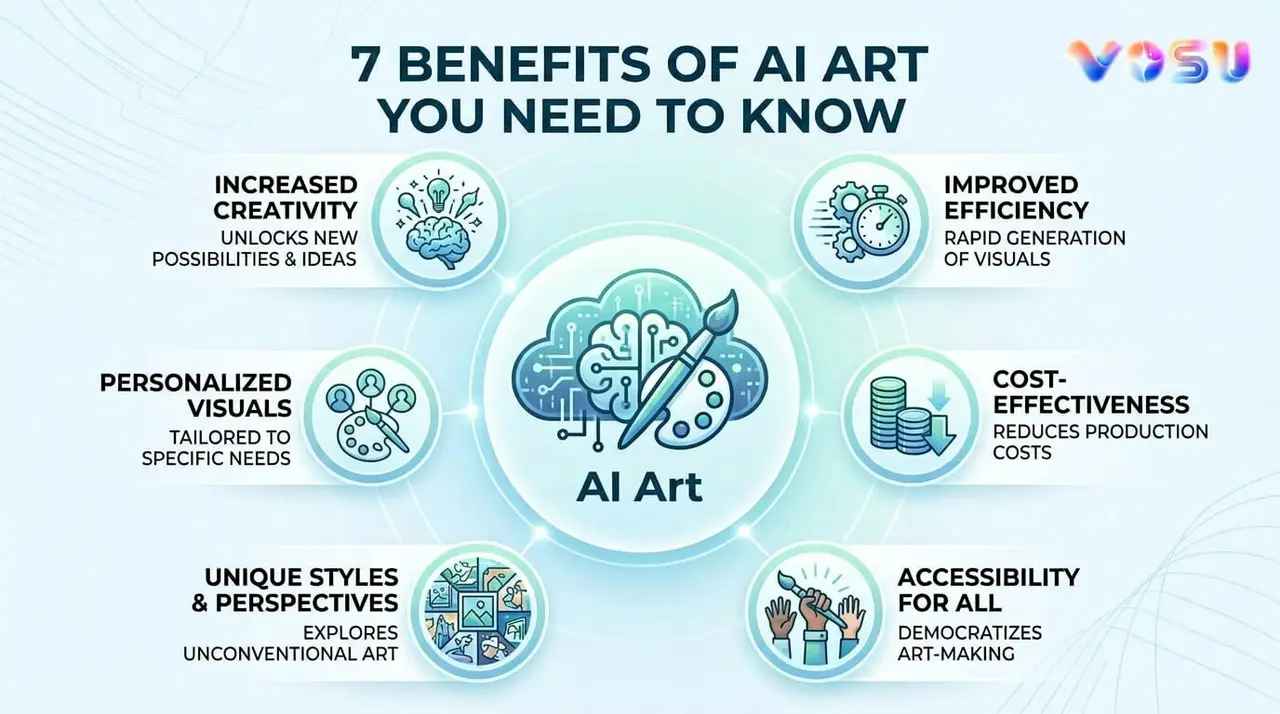
The benefits of AI art bring new possibilities to the creative world. They help artists work faster, reach wider audiences and unlock new ideas. AI supports creative freedom and bridges traditional and digital art. It gives artists more time by handling tasks like color correction and style changes. These tools match content to user preferences and improve how people connect with art. AI systems boost quality, speed and innovation across formats. They reshape how people create, view and preserve art in today’s world.
7 benefits of AI art are given below.
- Enhanced creativity boosts idea generation and blends artistic styles to help artists explore new visual directions quickly.
- Collaboration opportunities combine human vision and digital art advantages that open fresh creative paths and unique results.
- Personalized experiences analyze user preferences, tailor art, increase engagement and build emotional connections.
- Accessibility supports people with limited skills or resources, bridges physical and digital art and expands participation.
- Cost efficiency reduces labor and material costs through automation and faster production, which makes art more affordable.
- Innovation brings new techniques like color correction, historical recreation and immersive formats that reshape art styles.
- Art preservation protects works through digital backups, restoration and forgery detection, which ensures long term cultural heritage.
1. Enhanced creativity
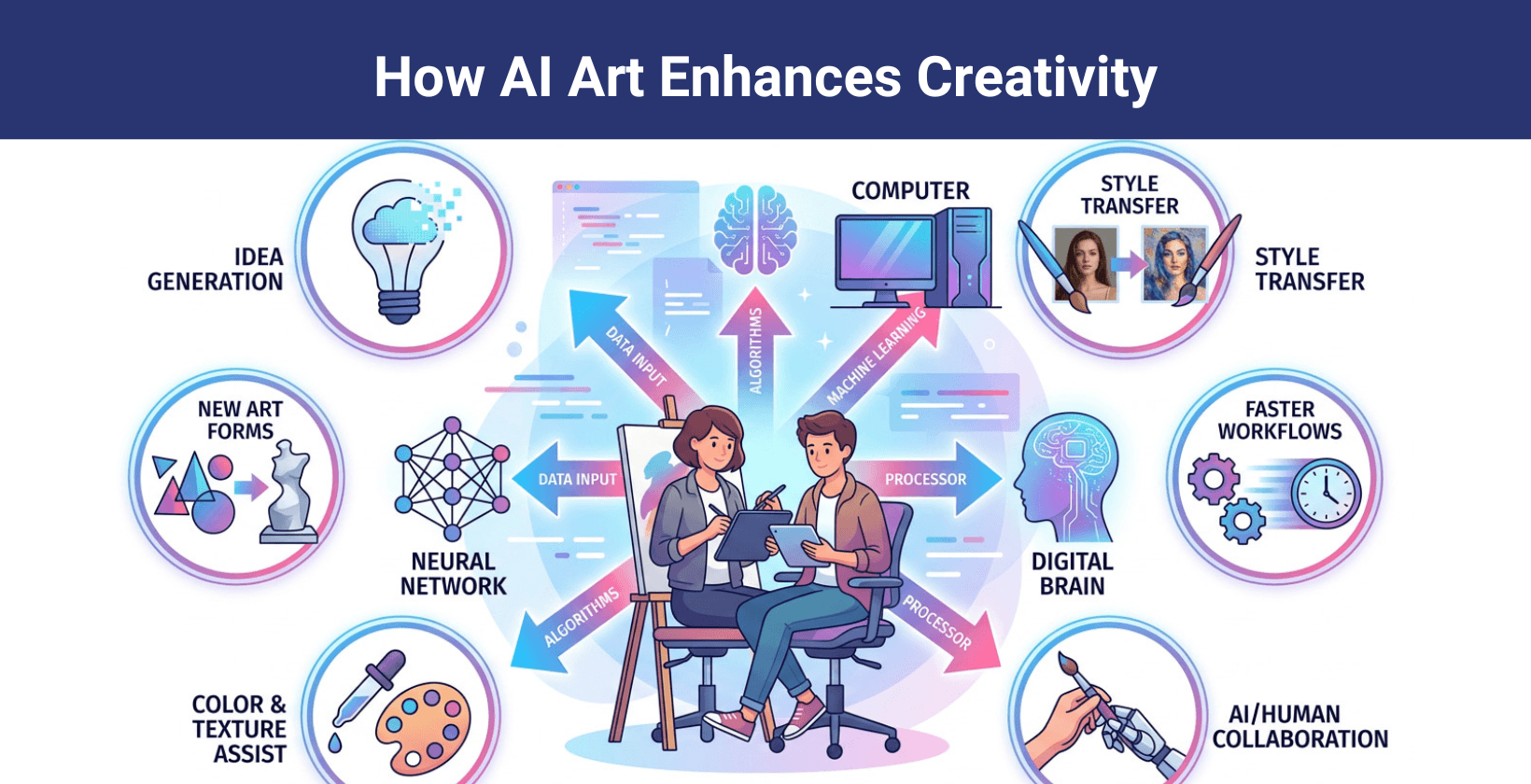
AI art acts as a creative partner that boosts human imagination and accelerates idea generation. It helps artists break creative blocks and explore visual styles quickly. Artists test shapes, colors and compositions with ease and find new aesthetics through style shifts. Automation removes repetitive tasks like edits and detail fixes, which frees time for concept refinement. This focus builds originality and improves artistic quality. AI tools combine with human skill to drive innovation and open new creative paths. AI art supports the artist, speeds up the process and makes creativity more focused and rewarding. Artists using Vosu.ai’s Flux feature can effortlessly blend multiple art styles in a single render, which unlocks new creative possibilities and this innovative approach streamlines experimentation and brings fresh originality to digital artworks.
How AI art enhances creativity is mentioned in the image below.
2. Collaboration opportunities
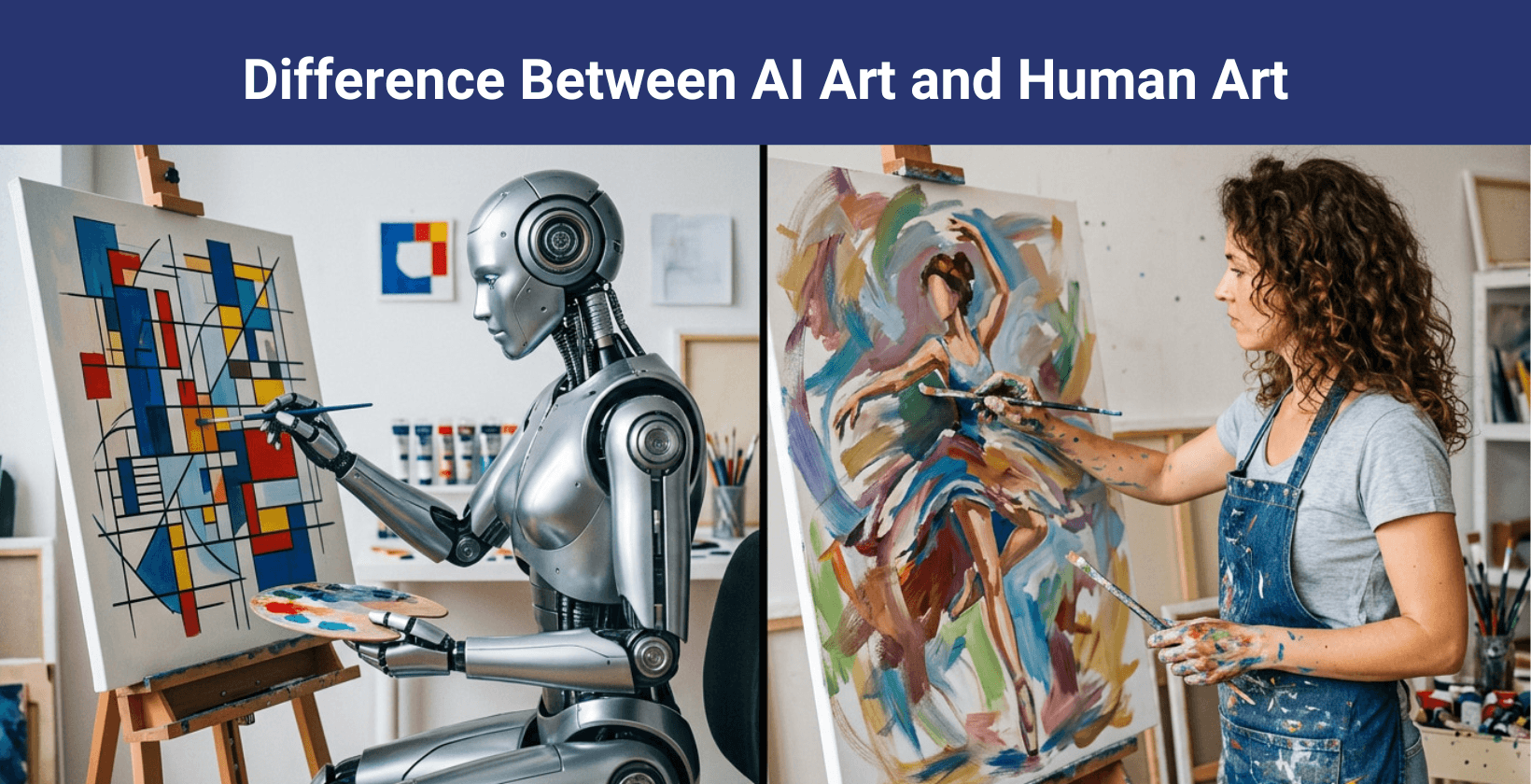
Humans and technology shape digital art through a creative partnership that combines artistic vision, skill and advanced tools. This synergy sparks innovation and moves art and design forward. Artists guide the process and technology offers new methods that make each piece unique. AI art collaboration now extends beyond static images, which allows artists to co-create dynamic cross-medium works such as AI-generated videos. New creative paths open when both work together. Challenges often arise around copyright, ownership and ethical concerns. Questions about rights and the cultural impact of AI generated art raise doubts about authorship and authenticity. These factors define how people value, interpret and share digital art across the world.
The Difference between AI art and human art is shown in the image below.
3. Personalized experiences
Personalized experiences in AI art use data to adapt content to each viewer’s unique traits and preferences. Biometric input reveals emotional states and guides adjustments that strengthen personal connection. This method increases engagement and inspires deeper artistic exploration. Greater accessibility allows diverse audiences to experience art tailored to their needs. Personalization supports new business models through custom content that feels individually meaningful. Artists can receive custom album covers or AI-generated portraits that are precisely tuned to the user’s unique style or preferences, so each artwork is personal and engaging. The result is art that resonates with each viewer and reflects their personal context.
4. Accessibility
Digital content accessibility grows through creative empowerment when new tools support people with disabilities and those with limited resources. AI tools give access to art for users without technical skills or those who need features like alt text for visuals. Disabled artists find new ways to create and share their work, which allows equal participation in digital art spaces. Affordable and inclusive tools solve ethical concerns and reach wider audiences. This shift creates space for creative voices once excluded and makes art a shared and inclusive experience.
5. Cost efficiency
Automation and optimized workflows improve cost efficiency in AI art. AI handles routine tasks, reduces labor costs and increases output speed. Smart resource use cuts material waste and lowers total expenses. Fast production lets artists complete more projects and meet rising demand. Digital tools manage large volumes without extra costs and make high quality art more available. These gains expand participation, drive innovation and support growth across creative communities. Platforms like Midjourney Pro require a $30 monthly subscription for a single model, while Vosu.ai provides access to over 100 AI models for just $10 per month under one unified plan. This approach allows artists and creators to save on costs and gain broader creative tools within a more affordable structure.
6. Innovation
Innovation in AI art grows as new techniques produce original visuals and bold ideas. Human collaboration creates personalized experiences that reflect diverse tastes and perspectives. Artists recreate historical masterpieces to enrich digital archives and open new ways to explore classic works. Immersive formats pull viewers into interactive environments where art feels present and alive. Artists and developers apply these methods in design, entertainment and education. Ethical standards direct this progress and ensure responsible outcomes. These changes reshape creative expression, push art into new dimensions and unlock unique forms of communication.
7. Art preservation
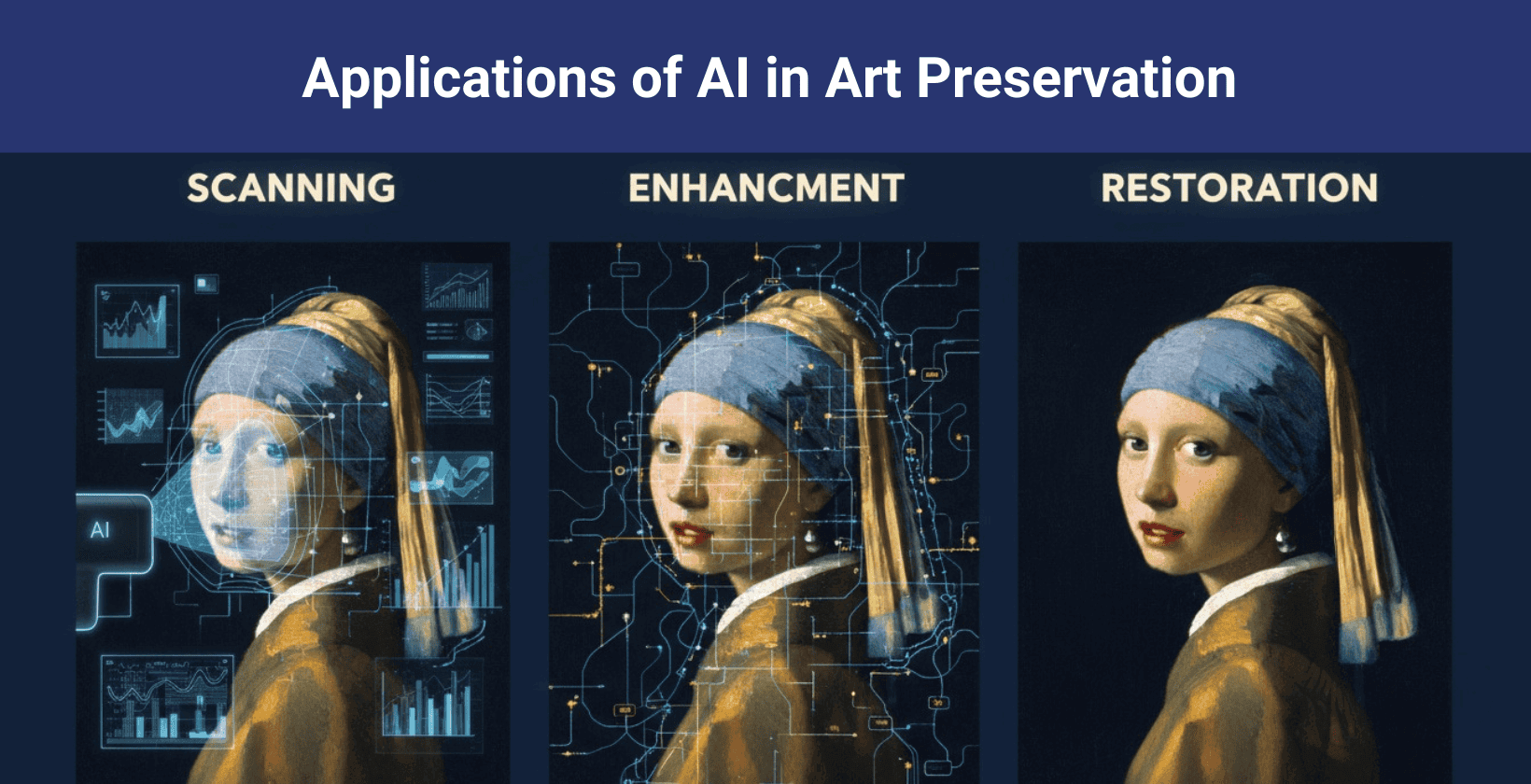
Art preservation uses smart technology for damage assessment, early detection and rapid repair. Virtual reconstruction restores lost or damaged sections and protects cultural heritage in both physical and digital formats. Reverse engineering helps detect forgeries and verify artwork authenticity. Archival backups ensure secure copies remain accessible for future generations. Preventive conservation relies on data to identify risks and maintain stable conditions. Improved access reaches wider audiences and ensures long term protection of artworks. Museums increasingly rely on AI-driven restoration projects to digitally reconstruct and repair damaged artworks that preserve priceless cultural heritage for future generations. This approach combines advanced tools with proven methods to strengthen preservation across generations.
The applications of AI art preservation are shown in the image below.
What are the challenges of AI art?
Challenges of AI art are copyright, ethical concerns and the devaluation of human creativity that affect its authenticity, acceptance and ethical use. These challenges impact how people value, use and respond to AI generated content.
The challenges of AI art are given below.
- Copyright: Copyright laws face risks when AI copies historical artists or creates near identical works. These actions raise questions about ownership rights and what counts as fair use in digital art.
- Ethical concerns: Ethical concerns shape how technology interacts with culture and originality, influencing what creators choose to produce and how audiences engage.
- Devaluation of human creativity: Technology replaces key creative processes and causes a loss of artistic meaning. This shift changes how the public views AI art and lowers the value of human creativity.
- Lack of emotional depth: Lack of emotional depth limits how deeply a work resonates, as digital processes rarely match human feeling and subtlety.
- Technical limitations: Technical limitations in software or data restrict art quality, variety and detailed control, setting firm boundaries on what systems achieve.
- Quality limitations: Digital creations show quality limitations through unfinished forms, errors or weak concepts. These flaws reduce acceptance and weaken the lasting impact of AI art.
Is AI art bad for the environment?
No, AI art is not bad for the environment when responsible AI usage reduces carbon footprint and local resource strain. Efficient resource management helps digital creation minimize energy consumption and environmental impact.
Are artists struggling because of AI?
Yes, artists are struggling because of AI. Artist income falls and the value of creativity declines despite gains in production speed. Public concern over lost originality reduces opportunities for artists.
Do artists have a future with AI?
Yes, artists have a future with AI. Artistic experimentation and new artistic mediums expand possibilities while preserving the unique human signature that defines creative work.
Will AI replace 3D art?
No, AI will not replace 3D art as it automates repetitive tasks and improves accessibility. AI serves as an augmentation, not a substitute. AI acts as a powerful tool that supports and enhances artists' creativity rather than replacing their role entirely.
Why is AI art so controversial?
AI art is so controversial because of copyright infringement, devaluation of human art and ethical concerns. Questions about training data ethics and lack of artistic intent add to the debate. The affordability of AI generated images and shifts in the valuation of art fuel disagreements among creators and audiences.
Will AI be the end of art?
No, AI will not be the end of art because art is deeply connected to personal experience and artistic intention, which AI cannot fully replicate. Handmade art and fine art continue to hold unique value that cannot be replaced by commercial or AI generated works.