Artificial intelligence (AI) applications are software tools and platforms that use advanced algorithms to analyze data, make predictions, and perform tasks with minimal human input. In 2026, AI adoption has shifted from experiments to scale. Frontier models such as Flux, Runway, Luma, Pika, Gemini, and ElevenLabs-class voices now power creative and enterprise workflows. Platforms like Vosu.ai act as the unified layer, combining text, image, video, and voice models so businesses can produce creator-style UGC videos, product explainers, and localized content in minutes.
AI is no longer an experimental technology, it is a practical solution that addresses real-world challenges. It assists doctors in early disease detection and personalized treatment plans. AI drives process automation, optimizes supply chains, and supports strategic decision-making through real-time analytics. It powers fraud detection systems and enables predictive threat analysis.
The value of AI applications lies in their ability to process vast amounts of information quickly, learn from patterns, and adapt to changing conditions. This leads to better resource utilization, cost savings, and enhanced customer experiences. As industries adopt AI at scale, it continues to open new possibilities in personalization, automation, and innovation.
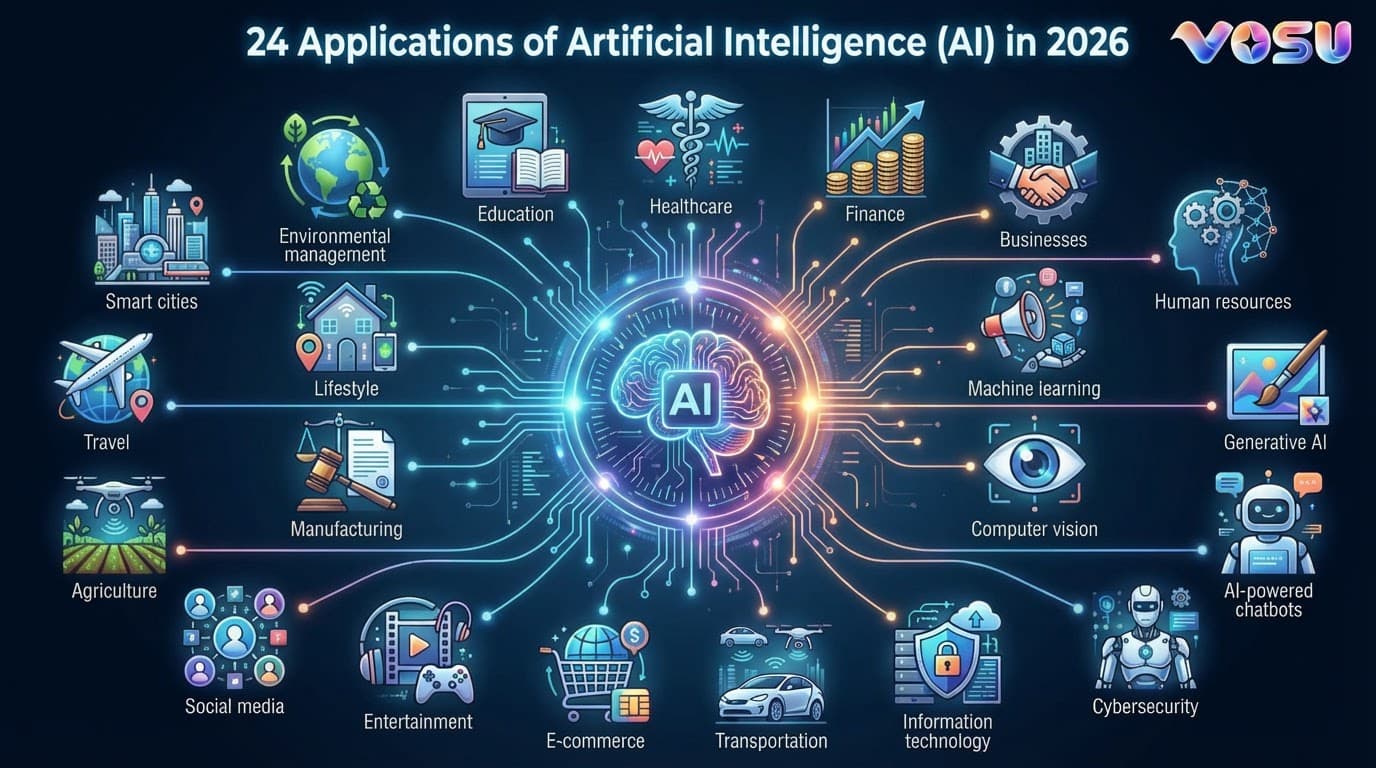
Top 24 applications of AI are given below.
- Education
- Healthcare
- Finance
- Businesses
- Human resources
- Marketing
- Machine learning
- Generative AI
- Computer vision
- AI powered chatbots
- Robotics
- Information technology
- Cybersecurity
- Transportation
- E-commerce
- Entertainment
- Social media
- Agriculture
- Manufacture
- Law
- Travel
- Lifestyle
- Smart cities
- Environmental management
1. Education
Artificial intelligence in education uses software to personalize learning, assist teachers, predict student needs, automate grading and support classroom management. These AI tools make learning more accessible and tasks more efficient for students and educators. Vosu.ai turns curricula into UGC-style lesson clips with AI tutors, lip-sync dubbing, and instant multilingual voices one project, all formats.
The applications of AI in education are given below.
- Personalized learning: Personalized learning adapts lessons to each student’s needs and improves access for different learning styles and speeds. AI applications that support personalized learning are DreamBox and Squirrel AI.
- Intelligent tutoring: Intelligent tutoring systems guide students step by step through tough concepts, give classroom support and automate tasks. AI applications that support intelligent tutoring are Carnegie Learning and BYJU'S.
- Automated grading: Automated grading and assessment reduce the burden on teachers by scoring assignments fast and accurately. This system gives teachers more time for classroom tasks. AI enabled educational technology (EdTech) platforms that support automated grading are Gradescope and Turnitin.
- Predictive analytics: Predictive analytics highlight students who need extra help and show performance trends. This approach improves access to targeted resources. BrightBytes and Civitas Learning are AI applications that support predictive analytics.
- Data driven insights: Data driven insights give teachers clear feedback about what works in their classroom. These insights improve lesson plans and student management. Edmentum and Knewton are AI powered platforms that support data driven insights.
- Chatbots and virtual assistants: Chatbots and virtual assistants answer student questions instantly and handle tasks automatically. They guide students to resources without disrupting classroom flow. AI platforms that support chatbots and virtual assistants are Mya and Georgia State’s Pounce bot.
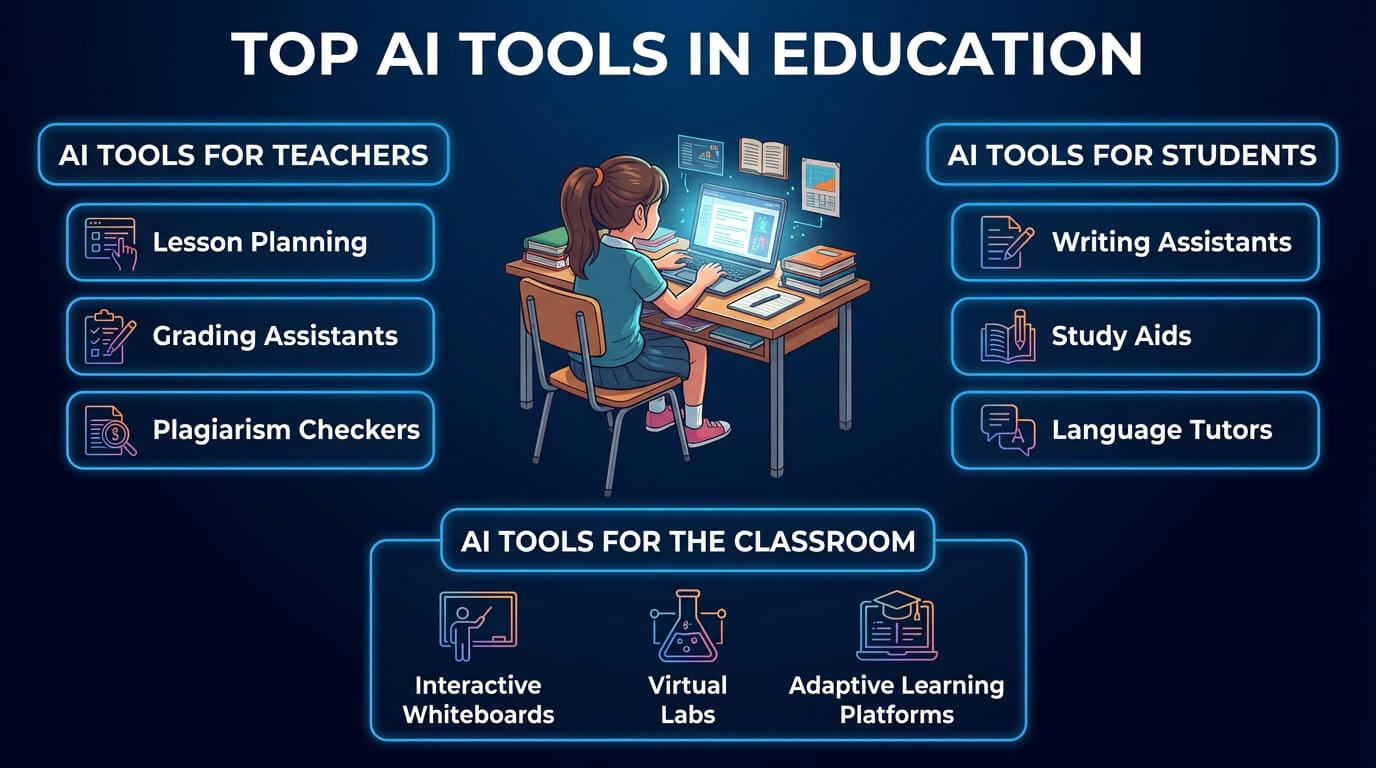
The top AI tools in education are mentioned in the image below.
2. Healthcare
Healthcare AI applications use intelligent software to help with medical diagnosis, speed up research, organize and analyze medical data, improve patient engagement and streamline workflows. These tools help doctors and patients make more informed healthcare decisions by turning complex information into actionable insights.
Vosu.ai produces patient-friendly explainers and after-care UGC videos using compliant avatars and AI voiceovers, with consented workflows.
The most popular applications of AI in healthcare are given below.
- Medical diagnosis and treatment: AI tools review medical data to help doctors detect illnesses early. These provide clear results and support fast decisions. AI applications that support medical diagnosis and treatment are IBM Watson Health and Aidoc.
- Drug discovery tools: Drug discovery AI tools analyze patient data and research patterns to find new medicines or vaccines. These work faster than traditional studies and include Atomwise and BenevolentAI.
- Patient data processing: Patient data processing AI systems organize records, track patient histories and connect information for better care and engagement. AI tools that support patient data processing include Health Catalyst and Epic Systems.
- Medical imaging analysis: Medical imaging analysis applications read scans and X rays to highlight problem areas for faster review. These support medical imaging analysis, including Zebra Medical Vision and PathAI.
- Electronic health records: Electronic health records tools allow secure storage of medical records and make sharing easier for doctors and patients to improve access and workflow. AI applications that support electronic health records include Cerner and Allscripts.
- Remote patient assistance: Remote patient assistance applications help doctors monitor patients from any location and detect issues early and support continuous care. AI platforms that support remote patient assistance include TytoCare and Biofourmis.
3. Finance
Artificial intelligence is used in finance for risk control, transparency, cash flow forecasting and automated reporting. AI tools improve data accuracy, increase transparency and help both businesses and individuals make better financial choices. Vosu.ai standardizes policy training and product walkthroughs with consistent AI voices and on-screen avatars audit-ready every time.
The top AI applications in finance are given below.
- Risk management and fraud detection: Risk management and fraud detection systems identify unusual transactions and limit financial losses to stop fraud early and build customer trust. Examples of AI applications used in risk management include platforms such as Darktrace and DataVisor.
- Enable transparency: Transparency tools in finance reveal trading activity, offer clear records and keep investors informed about risk and automation. AI platforms that promote transparency include solutions like OpenFin and Symphony.
- Cash flow forecasting: Cash flow forecasting systems predict incoming and outgoing funds and support business plans and maintain financial stability. AI solutions that assist with cash flow forecasting include platforms like Tesorio and HighRadius.
- Automated reporting: Automated reporting AI applications accelerate the preparation of financial statements and audits, minimize errors and free up teams to focus on higher value strategic work. Examples include platforms like Workiva and BlackLine, which use AI to automate data consolidation.
- Investment management: Investment management platforms analyze data to offer custom trading advice and adjust portfolios for customer goals. AI applications that support investment management include Betterment and Wealthfront.
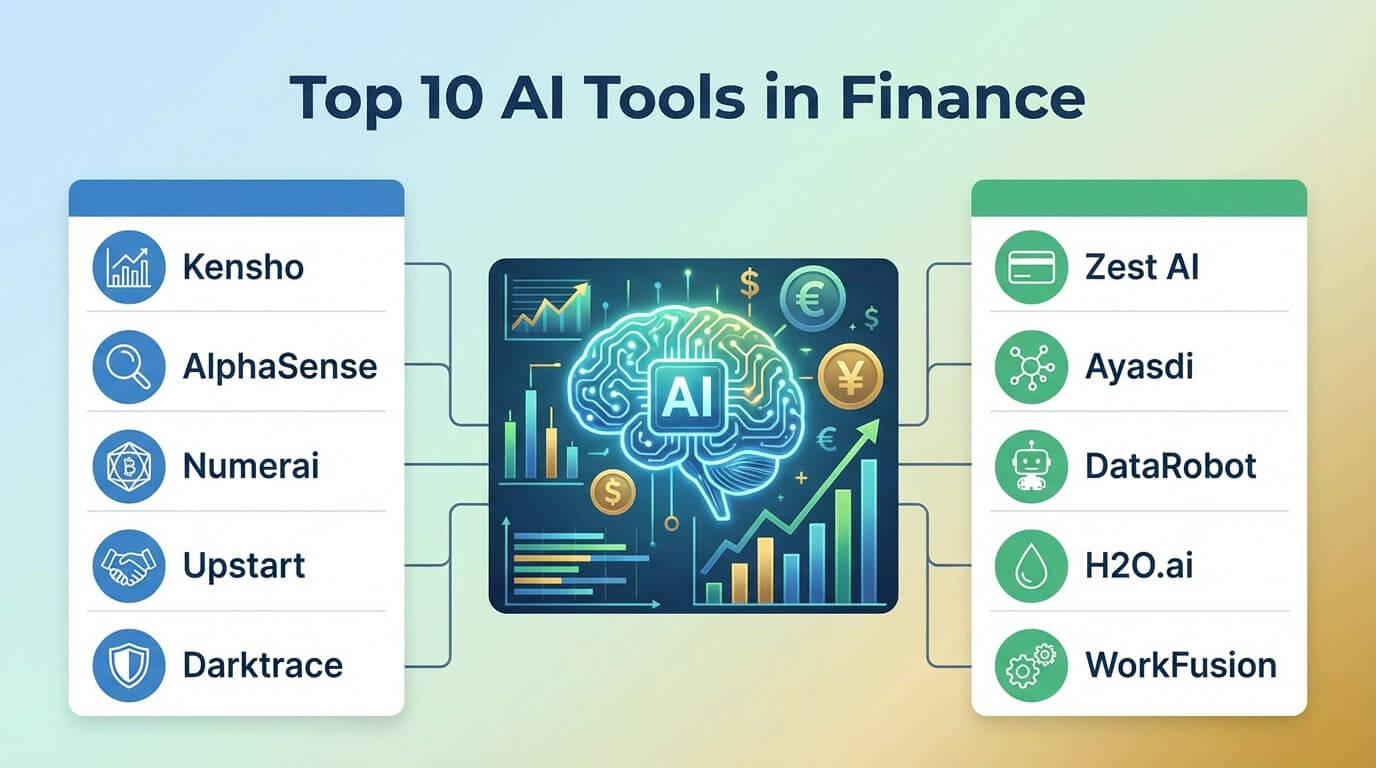
The top 10 AI tools in finance are mentioned in the image below.
4. Businesses
Leading businesses use AI for lead generation, sales optimization and product management. These solutions apply automation, data analysis, personalization and reporting to optimize sales, manage products, speed up processing and guide investments.
The top AI applications in businesses are given below.
- Lead generation: Lead generation systems search data for potential customers, rank prospects and help sales teams focus on high value opportunities. AI applications that support lead generation include Einstein and HubSpot.
- Sales optimization: Sales optimization platforms review buying habits, recommend products, and personalize outreach to increase conversion. Sales and RevOps teams now ship demo UGC, FAQ shorts, and case-study reels at scale using Vosu.ai templates, scripted avatars, and brand-cloned voices, making video-first outreach faster and more effective. AI applications that support sales optimization include Gong and Outreach.
- Product management: Product management solutions track performance, collect feedback and guide development to improve personalization. AI applications that support product management include Productboard and Aha!.
- Automated task: Automated task platforms handle repetitive, manual work, freeing teams to focus on creative projects and strategic priorities. Examples of AI powered tools that automate tasks include UiPath and Zapier, which streamline workflows, reduce errors and improve operational efficiency.
- Predictive analytics tools: Predictive analytics tools analyze past trends, forecast demand and guide future business planning. AI applications that support predictive analytics include Tableau and Alteryx.
- Algorithmic trading: Algorithmic trading and market insight platforms process financial data for fast, accurate trades and reporting. AI applications that support algorithmic trading include AlphaSense and QuantConnect.
5. Human resources
Human resources AI applications use software for Resume screening and candidate matching, automated interview scheduling and employee sentiment analysis. These tools save time in hiring, improve staff engagement and help manage compensation benchmarking.
The main AI applications in human resources are given below.
- Resume screening and candidate matching: Resume screening and candidate matching systems review resumes, compare skills and match top candidates to open jobs. AI applications that resume screening and candidate matching include HireVue and Pymetrics.
- Automated interview scheduling: Automated interview scheduling platforms set meeting times with candidates and managers. These tools reduce the workload for recruitment teams. AI applications that support automated interview scheduling include AlphaSense and QuantConnect. GoodTime, X.ai.
- Employee sentiment analysis: Employee sentiment analysis platforms track data to spot engagement trends and detect issues affecting productivity. AI applications that support employee sentiment analysis include Culture Amp and Peakon.
- Workforce planning and analytics: Workforce planning and analytics tools analyze employee data and patterns. These tools forecast staffing needs and improve resource allocation. AI applications that support workforce planning and analytics include Visier and Workday.
- Onboarding automation: Onboarding automation solutions provide easy orientation, manage paperwork, and deliver training. These tools speed up new hire integration. Vosu.ai enhances this process by converting SOPs into bite-size onboarding videos with a consistent presenter and auto-captions for global teams. AI applications that support onboarding automation also include Sapling and BambooHR.
- Employee engagement: Employee engagement analysis tools measure satisfaction, gather feedback and guide retention strategies with detailed employee data. AI applications that support employee engagement include Glint and Qualtrics.
6. Marketing
Marketing applications use advanced software for personalized marketing campaigns, customer analysis, automation and campaign optimization. These tools help teams reach the right audience, personalize messages and enhance the applications of artificial intelligence in marketing.
The most popular AI applications in marketing are given below.
- Personalized marketing campaign: Personalized marketing campaign systems adjust content for each individual. These systems boost engagement and improve return on investment. AI applications that support personalized marketing campaigns include Persado and Dynamic Yield.
- Customer behavior analysis: Customer behavior analysis platforms track shopping trends, preferences and interactions. These insights guide business decisions and help tailor personalized offers. AI applications that support customer behavior analysis include the Amazon recommendation engine and Google Analytics.
- Automated content generation: Automated content generation software writes emails, crafts headlines, and drafts social posts. This simplifies content creation for faster and more efficient campaign launches. Create creator-style ads, UGC hooks, and localized variants in minutes. Vosu.ai blends frontier image and video models with realistic voice cloning to deliver production-ready assets without switching tools. AI applications that support automated content generation include Jasper and Copy.ai.
- Sentiment analysis: Sentiment analysis solutions review online mentions and reviews. They help teams understand public opinion and adjust their strategy accordingly. AI applications that support sentiment analysis solutions include Brandwatch and Meltwater.
- Dynamic ad targeting: Dynamic ad targeting platforms deliver the right ad at the right moment for each user. This approach increases click through rates and expands reach. AI applications that support dynamic ad targeting solutions include Facebook Ads and Google Ads.
- Targeted advertising: Targeted advertising tools segment audiences and select the best products or services for each group. AI applications that support targeted advertising tools include AdRoll and Adobe Target.
- Customer segmentation: Customer segmentation software divides audiences based on specific traits, habits or values. This makes messaging more targeted and effective. AI applications for customer segmentation include HubSpot and Segment.
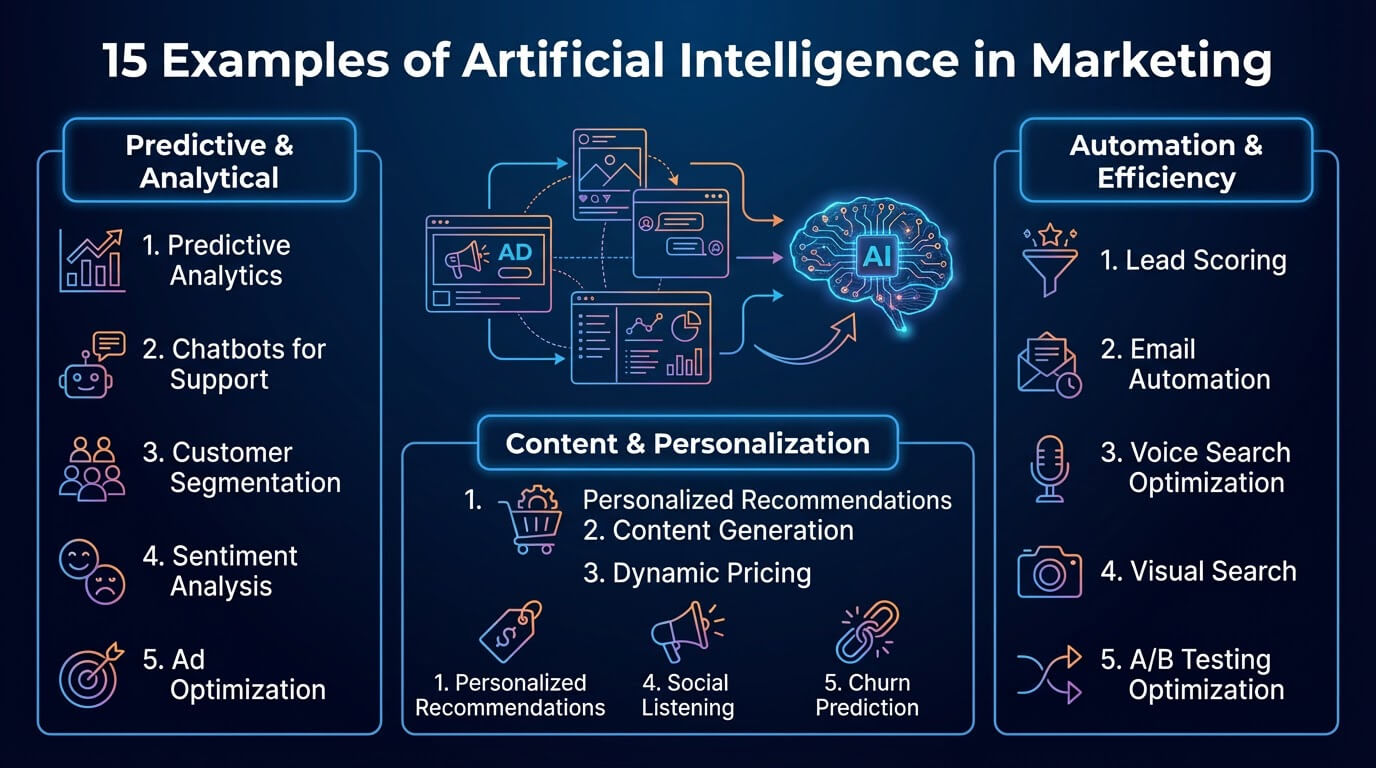
15 examples of AI in marketing are shown in the image below.
7. Machine learning
Machine learning AI applications use tools for predictive analytics, fraud detection and demand forecasting. These solutions increase accuracy, automate data analysis and support tasks across multiple industries.
Key AI applications in machine learning are given below.
- Predictive analytics: Predictive analytics platforms review past trends to predict future outcomes. They guide business decisions with solid data insights. AI applications that use predictive analytics include DataRobot and RapidMiner. Analysts now take this further by turning dashboards into stakeholder-ready recap videos with auto-narration, charts, and branded bumpers in Vosu.ai, making insights more engaging and accessible.
- Fraud detection: Fraud detection systems detect odd transactions and recognize patterns. They block threats fast to protect financial interests. AI applications that support fraud detection include SAS Fraud Management and FICO Falcon.
- Demand forecasting: Demand forecasting solutions analyze buying trends and predict supply needs. They support inventory plans for retailers and manufacturers. AI applications that support demand forecasting include SAP Integrated Business Planning and Forecast Pro.
- Customer segmentation: Customer segmentation software divides users by habits, spending or interests. It improves personalization and enables targeted outreach. AI applications that support customer segmentation include KNIME and Alteryx.
- Anomaly detection: Anomaly detection platforms scan data for errors, unusual events or risks. They help teams act fast to prevent losses. AI applications that support anomaly detection include Amazon Lookout for Metrics and Anodot.
8. Generative AI
Generative AI applications use software for automated content creation, design optimization, text, image, audio and video generation. These tools deliver autonomous solutions across creative, scientific and business fields.
The most popular generative AI applications are given below.
- Content creation: Content creation tools write articles, design graphics, compose music and produce audio or video clips. AI applications that support content creation include ChatGPT, Jasper, DALL-E and Synthesia. Vosu.ai unifies text-to-image, text-to-video, avatars, and voices so creative teams stop tool-switching and start publishing, making it a central hub for modern content workflows.
- Virtual environments: Virtual environment platforms craft games, simulations and immersive worlds. They enhance digital experiences and boost customer support. AI applications that support virtual environments include Unity AI and NVIDIA Omniverse.
- Design optimization: Design optimization solutions propose new engineering layouts, model buildings or craft product prototypes. They speed up development and increase efficiency. AI applications that support design optimization include Autodesk Generative Design and AlphaFold.
- Natural language processing: Natural language processing applications produce realistic conversations, answer questions and summarize large texts to streamline communication. AI applications that support natural language processing include ChatGPT, Gemini and Claude.
- Drug discovery: Drug discovery software explores molecular structures, searches for new compounds and reduces research time in pharmaceutical development. AI applications that support drug discovery include AlphaFold, BenevolentAI.
- Script generation: Script generation AI applications draft code, write video scripts and structure presentations or reports. They save time and improve automation. AI applications that support script generation include GitHub Copilot, Jasper and Grammarly.
9. Computer vision
Computer vision applications use programs for defect detection**, face recognition and object recognition**. These solutions improve accuracy, speed up work and support many real world functions.
The top AI applications in computer vision are given below.
- Defect detection: Defect detection systems find flaws in products during automated quality inspection. They increase reliability and cut waste in factories. AI applications that support defect detection include LandingLens and Cogniac. Ops teams now auto-generate visual QA summaries and defect explainers as short videos with clear narration in Vosu.ai, making inspection insights easier to share and act upon.
- Face recognition: Face recognition platforms identify people in images and videos. They support security, banking and smartphone access. AI applications that support face recognition include Face++, Amazon Rekognition.
- Object recognition: Object recognition software spots and labels items in pictures or live video, supporting organization, automation and retail tasks. AI applications that support object recognition include YOLO and Google Cloud Vision.
- Surveillance monitoring: Surveillance monitoring solutions track activities and flag unusual movement. They keep public areas and private property protected. AI applications that support surveillance monitoring include BriefCam and AnyVision.
- Autonomous navigation: Autonomous navigation programs read road signs, obstacles and people. They power driverless cars and delivery robots. AI applications that support autonomous navigation include Tesla Autopilot and Mobileye.
- Quality control: Quality control platforms review images of finished goods for errors. They keep standards high without slowing down manufacturing. AI applications that support quality control include Inspekto and Deepomatic.
10. AI powered chatbots
AI powered chatbot applications use smart programs for automated customer support, lead generation and lead qualification with natural language processing (NLP). These solutions streamline interactions and improve efficiency for users and businesses.
The top applications of AI powered chatbots are given below.
- Automated customer support: Automated customer support chatbots answer questions at any time and handle multiple inquiries quickly. They help resolve issues without human agents. AI applications that automate customer support include ChatGPT, Gemini, and Zendesk bots. Building on this, Vosu.ai enables teams to turn support chats into how-to video answers, adding an AI presenter, matching tone, and exporting content in vertical or widescreen formats.
- Lead generation: Lead generation chatbot systems greet visitors, gather contact details and identify interested prospects. They fill the sales pipeline and support team outreach. AI applications that support lead generation include Salesforce Einstein, Drift and HubSpot.
- Lead qualification: Lead qualification chatbots ask targeted questions, assess readiness to buy and route leads to the right person. They help teams focus on serious customers. AI applications that support lead qualification include Intercom, Landbot and Qualified.
11. Robotics
Robotics applications use intelligent programs for industrial automation, service robots, autonomous drones and predictive maintenance. These tools boost industrial productivity, service quality and safety across sectors.
The most popular AI applications in robotics are given below.
- Industrial automation: Industrial automation robots handle precise tasks, optimize assembly lines and work safely alongside people using human robot collaboration and machine learning. AI applications that support industrial automation include FANUC, ABB and Schneider Electric EcoStruxure.
- Service robots: Service robots in healthcare and hospitality deliver medication, clean rooms, transport items and interact with patients or guests. They use autonomous movement and computer vision to perform these tasks. AI applications that support service robots include Da Vinci (surgery), TUG (hospital logistics), Aethon and Prospera Health robots.
- Autonomous drones: Autonomous drones rely on smart sensors, machine learning and computer vision. They perform real time obstacle detection, aerial surveying, disaster response and mapping. AI applications that support autonomous drones include DJI, Skycatch, DroneSense and NVIDIA Jetson onboard AI.
- Predictive maintenance: Predictive maintenance robots use sensors and algorithms to track equipment health. They analyze vibration, temperature, and performance data to prevent breakdowns before failure. AI applications that support predictive maintenance robots include ABB Ability and Energy Robotics Inspection. Vosu.ai enhances this area by producing step-by-step safety and maintenance tutorials with avatar guides and timed callouts, making procedures easier to follow and standardize across teams.
12. Information technology
Information technology applications use intelligent software for network automation, Bug prediction and resource optimization. These systems streamline daily tasks, improve accuracy and keep networks running efficiently.
The top AI applications in information technology are given below.
- Network automation: Network automation programs monitor traffic and predict network issues. They correct problems and adjust settings for better performance and security. AI applications that support network automation include Itential, Juniper Mist AI and Nile Secure.
- Bug prediction: Bug prediction solutions scan code and study past errors. They alert developers about possible software problems before release. AI applications that support bug prediction include GitHub Copilot, CodeGuru and Sentry.
- Resource optimization: Resource optimization platforms track usage patterns and adjust resource distribution. They minimize waste to support cost effective IT operations. AI applications that support resource optimization include Resolve.io, Dynatrace and Turbonomic.
- Incident response: Incident response systems detect threats, analyze risk, and automate fixes for fast recovery from security events. AI applications that support incident response include Darktrace, Blink, and Panther. Teams also now ship change-log highlights and incident postmortems as crisp 60 to 90s video updates, with script, voice, and subtitles created directly in Vosu.ai, to make technical reporting faster and easier to consume.
- Code generation: Code generation tools help developers write software, suggest improvements and reduce mistakes. They speed up projects and simplify maintenance. AI applications that support code generation include GitHub Copilot, Amazon CodeWhisperer and Tabnine.
13. Cybersecurity and data security
Cybersecurity and data security applications use intelligent programs for threat detection, behavioral analytics and malware analysis. These systems protect data, block attacks and increase real time awareness of cyber threats.
The top AI applications in cybersecurity and data security are given below.
- Threat detection: Threat detection tools monitor network traffic, flag unauthorized access and react to unusual patterns. AI applications that support threat detection include Darktrace, Cylance, SentinelOne and Vectra AI.
- Behavioral analytics: Behavioral analytics solutions study user habits, spot abnormal actions and catch internal risks before harm occurs. AI applications that support behavioral analytics include Exabeam, Vectra AI and Securonix.
- Malware analysis: Malware analysis platforms inspect files, uncover viruses and remove suspicious code. They lower infection rates and protect systems. AI applications that support malware analysis include VirusTotal, CylancePROTECT, IBM Watson for Cybersecurity and FireEye Helix.
- Phishing prevention: Phishing prevention software identifies fake websites, scans messages, and blocks scam attempts. AI applications that support phishing prevention include Proofpoint, Barracuda, Google TensorFlow in Gmail, and PhishProtection. In addition, organizations now rely on rapid awareness clips, phishing simulations, and policy refreshers with trusted, consistent AI voices, produced in Vosu.ai, to train employees and strengthen defense against evolving threats.
- Incident response: Incident response systems automate alerts and prioritize security threats. They isolate impacted devices to reduce damage. AI applications that use incident response analytics include QRadar, Cortex XSOAR, Radiant Security, IBM QRadar and Palo Alto Networks Cortex XSOAR.
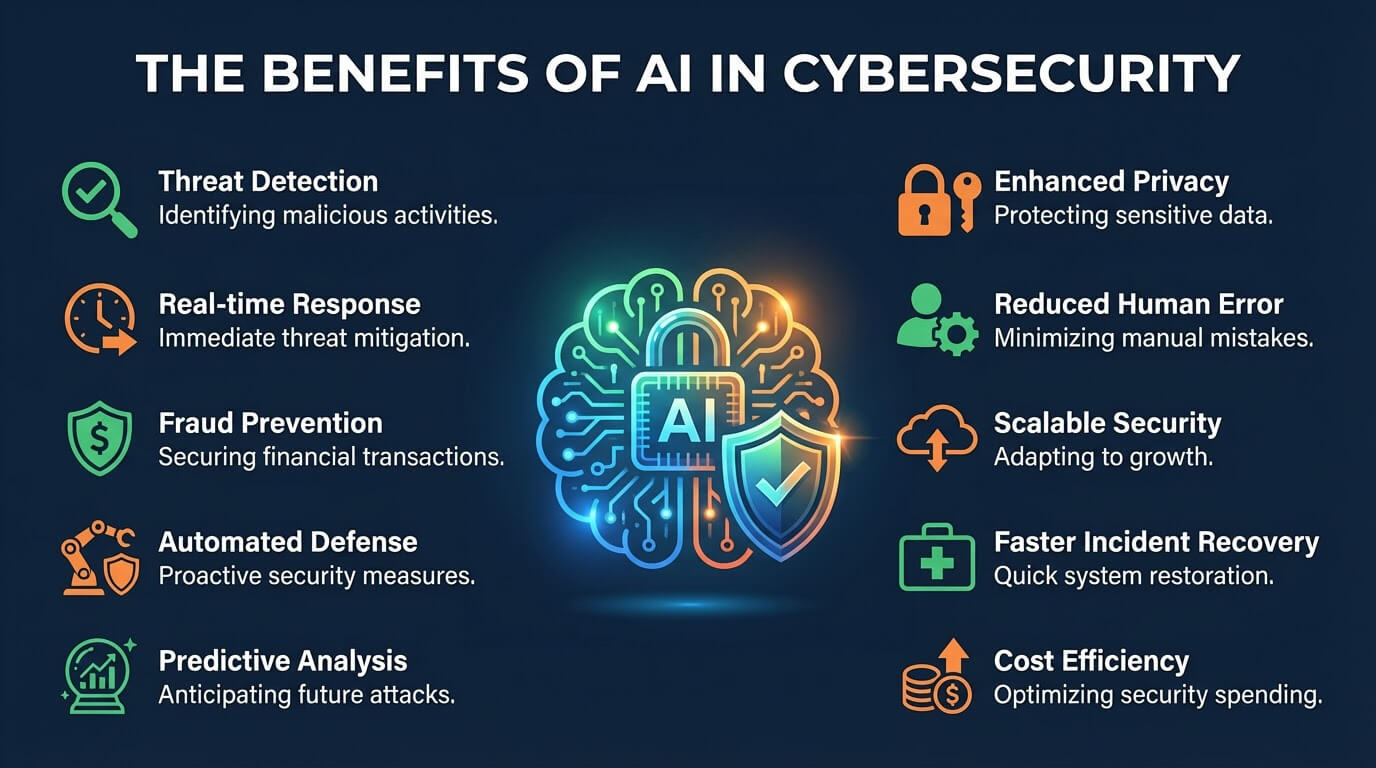
The benefits of AI in cybersecurity are shown in the image below.
14. Transportation
Transportation applications use intelligent software for autonomous vehicles, navigation and GPS, traffic optimization and route planning. These systems improve road safety, simplify urban movement and support logistics for people and goods.
The top AI applications in transportation are given below.
- Autonomous vehicle: Autonomous vehicle platforms use smart sensors, computer vision and deep learning. They steer, brake and monitor road conditions. AI applications that support autonomous vehicles include Waymo, Tesla Autopilot, Mobileye and Argo AI.
- Navigation and GPS: Navigation and GPS tools select the best routes, update travel times and adjust paths using real time traffic patterns. AI applications that support navigation and GPS analytics include Google Maps, Waze and Moovit.
- Traffic optimization: Traffic optimization systems control signals, reduce congestion and help cities manage flow through adaptive data from cameras and sensors. AI applications that support traffic optimization include IBM Traffic Prediction, TrafficSense and StreetLight Data.
- Route planning: Route planning software plots the most efficient delivery or travel routes. It saves fuel and improves delivery speed for shipping and logistics firms. AI applications that support route planning include RouteQ, Peak Route Planning and Trip Planner AI.
- Fleet management: Fleet management platforms track commercial vehicles and schedule predictive maintenance. They analyze driver behavior and automate dispatch. Driver training, route updates, and hazard briefings become clear, narrated micro-modules in Vosu.ai, helping fleets communicate faster and safer with drivers on the road. AI applications that support fleet management include Shift AI, Michelin Connected Fleet, and Turbonomic.
- Delivery drones: Delivery drones use smart flight controls, obstacle detection and data analytics. They enable autonomous navigation and safe package drops. AI applications that support delivery drones include Amazon Prime Air, Wing, DJI and UPS drone service.
15. E-commerce
E-commerce applications use software for personalization, inventory management, fashion industry solutions and digital twin platforms. These systems boost sales, enhance user experience and keep operations running smoothly.
Key AI applications in e-commerce are given below.
- Personalized product recommendation: Personalized product recommendation engines select items matched to each shopper’s style and interests. They increase sales and boost engagement. AI applications that support personalized product recommendations include Amazon Personalize, Bloomreach, and Dynamic Yield. Vosu.ai makes shoppable product videos, unboxings, and UGC reviews with auto-resize, subtitles, and localized voiceovers at scale which gives retailers an additional way to personalize and convert through dynamic content.
- Inventory management: Inventory management systems adjust stock, predict trends and trigger orders to avoid shortages or overstock in real time. AI applications that support inventory management include TradeGecko, Oracle NetSuite and Zoho Inventory.
- Fashion industry: Fashion industry solutions suggest outfit combinations, track style trends and recommend fits based on images or preferences. AI applications that support the fashion industry include Vue.ai, Stitch Fix and True Fit.
- Digital twin: Digital twin platforms replicate store setups, track customer movement and optimize supply chain flows through detailed virtual modeling. AI applications that support digital twins include PTC ThingWorx and Siemens Digital Industries.
- Retail automation: Retail automation applications handle checkout and monitor stock levels. They suggest promotions, streamlining processes for both online and in store operations. AI applications that support retail automation include Shopify Flow and NCR FastLane.
- Customer service: Customer service automation chatbots answer inquiries and provide order updates. They handle returns without needing human staff. AI applications that support customer service include Shopify Flow, NCR FastLane. Ada, Zendesk and Intercom.
- Demand forecasting: Demand forecasting solutions estimate market interest, spot seasonal shifts and support timely promotions for supply chain optimization. AI applications that support demand forecasting include Blue Yonder and SAP Integrated Business Planning.
- Dynamic pricing and promotion: Dynamic pricing and promotion engines adjust prices or discounts based on demand, competition and inventory. This helps maximize profit and clear out stock. AI applications that support dynamic pricing and promotion include Competera, Revionics and Prisync.
16. Entertainment
Entertainment applications use software for personalization, gaming, AI generated content and virtual actors. These tools shape new forms of media, creative process and audience engagement.
The top AI applications in entertainment are given below.
- Personalized recommendation: Personalized recommendation systems suggest movies, songs and shows based on user tastes. This increases viewing time and boosts engagement. AI applications that support personalized recommendations include the Netflix recommendation engine and Spotify Discover Weekly.
- Gaming: Gaming platforms use procedural content creation and difficulty adjustment. They feature lifelike characters to enhance the user experience. AI applications that support gaming include Unity AI and Ubisoft’s Commit AI.
- AI generated content: AI-generated content solutions craft music, scripts, and visual effects. They support fast content creation and enable new creative formats. Vosu.ai allows creators to cut trailers, produce shorts, and deploy synthetic hosts with lip-sync, soundtrack beds, and fast A/B variants, all in one workflow. AI applications that support AI-generated content also include Jukebox by OpenAI and Amper Music.
- Virtual actors: Virtual actors software produces digital characters for films, games and ads. It replaces real life performances or adds enhancements to them. AI applications that support virtual actors include Synthesia, Soul Machines.
- Audience analytics: Audience analytics applications study user reactions, predict trends and guide content planning through precise data. AI applications that use audience analytics include Crimson Hexagon, Conviva.
- Interactive storytelling: Interactive storytelling platforms adapt plots, responses and visuals to each user. This creates unique story paths and personalized endings. AI applications that use interactive storytelling include Inkle and Charisma.ai.
17. Social media
Social media applications use programs for content moderation, trend detection, ad targeting and user segmentation. These solutions protect online spaces, help brands reach the right people and personalize user experience.
Key AI applications in social media are given below.
- Content moderation: Content moderation systems scan posts, images and videos to remove harmful or rule breaking material quickly. AI applications that use content moderation include Brandwatch, Microsoft Content Moderator and Stream AI Moderation.
- Trend detection: Trend detection engines review millions of posts to spot rising topics, hashtags or viral content. They guide new campaigns before trends reach their peak. AI applications that support trend detection include Brandwatch, TrendSpottr and ContentStudio.
- Ad targeting: Ad targeting platforms review user habits, preferences and activity in real time. They show each person the most relevant ads based on that data. AI applications that support ad targeting include Meta Advantage+, Facebook’s ad system and Instagram Ad Engine.
- User segmentation: User segmentation tools group social media users by location, interests, or behavior. This allows brands to deliver more personalized content and precise audience targeting. AI applications that support user segmentation include Relevance AI Audience Segment Generator and Mailchimp Audience Segmentation. In addition, modern platforms now export platform-native verticals with auto-chapters, captions, and AI voice tracks, making them perfect for daily UGC posting at scale.
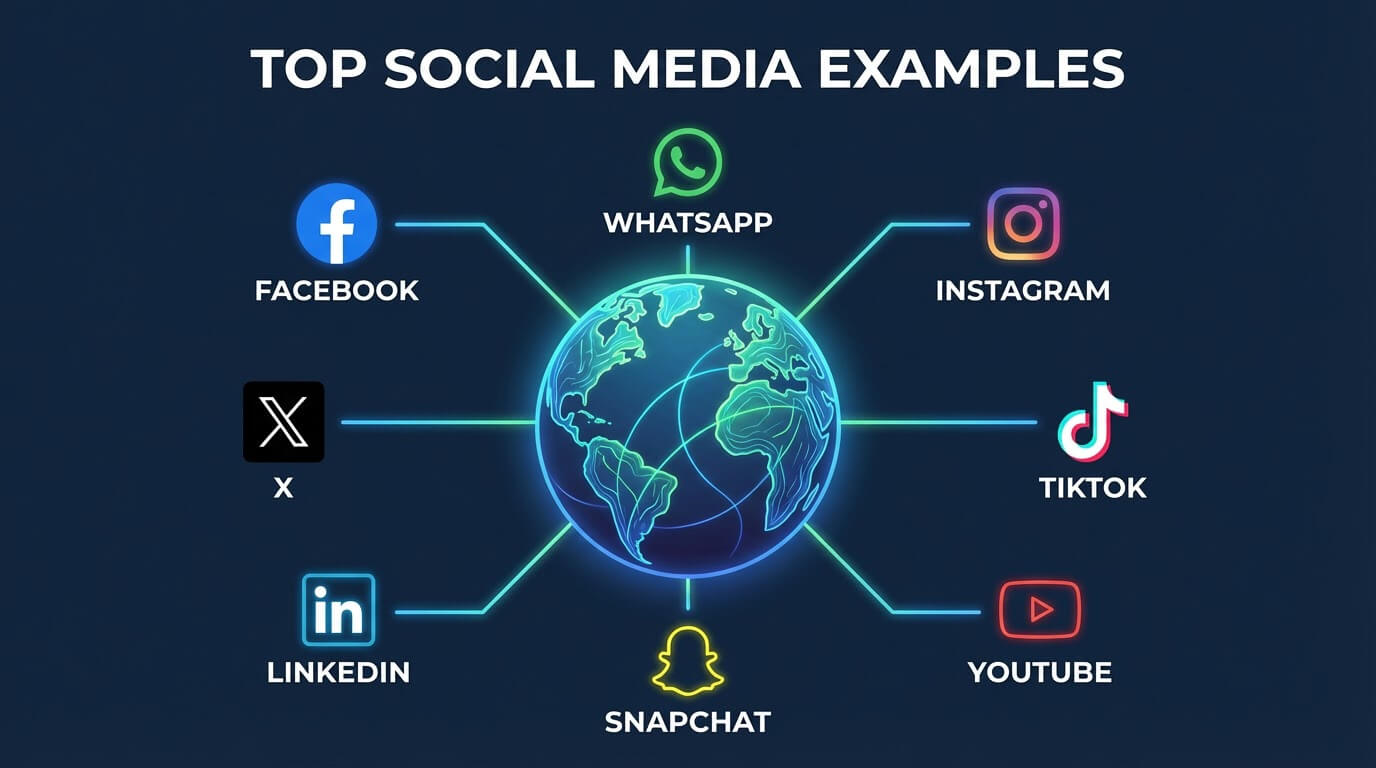
The image below shows the main AI applications in social media.
18. Agriculture
Agriculture applications use software for precision farming, pest detection, smart irrigation and yield prediction. These tools optimize yields, reduce manual work and increase farm sustainability.
The top AI applications in agriculture are given below.
- Precision farming: Precision farming tools analyze soil, weather and crop data to guide seed planting, fertilizer use and irrigation. AI applications that support user precision farming include OneSoil, Farmonaut and John Deere Operations Center.
- Pest detection: Pest detection platforms use image sensors and data analytics to identify infestations early. They support targeted treatments and reduce chemical usage. AI applications that support pest detection include T Pest, FieldRoutes AI and Trapview.
- Smart irrigation: Smart irrigation systems monitor soil moisture, weather trends and crop needs. They deliver exact water amounts to save resources and improve plant health. AI applications that support smart irrigation include Nile Secure, Farmonaut’s irrigation platform and AIDSII.
- Yield prediction: Yield prediction models use historical data, satellite images and pattern analysis to forecast crop output, reduce risk and improve planning. AI applications that support yield prediction include AgMRI, Keymakr Yield Predictor and Blue River Technology.
- Drone monitoring: Drone monitoring solutions scan fields with sensors and cameras, which check crop growth, health and soil conditions. AI applications that support drone monitoring include DJI Agras, Keymakr AI Drones and Parrot Bluegrass.
- Content automation: Farmers can now turn agronomy bulletins and weather alerts into field-ready brief videos with natural narration in Vosu.ai, enabling quick, accessible updates tailored to real conditions.
19. Manufacturing
Manufacturing applications use advanced programs for predictive maintenance solutions, quality control systems and supply chain and logistics. These technologies improve quality, reduce costs and keep operations efficient across every step.
Key AI applications in manufacturing are given below.
- Predictive maintenance: Predictive maintenance solutions forecast equipment failures before downtime strikes by collecting real time data and analyzing trends. This approach cuts costs, prevents accidents and boosts equipment lifespan. AI applications that support predictive maintenance include IBM Maximo and Siemens Predictive Services.
- Quality control: Quality control systems scan products with computer vision, spot small defects missed by humans and check compliance during production. This ensures high quality, lowers waste and protects brand reputation. AI applications that support quality control include Microsoft Azure AI Vision, Power Automate and Dynamics 365.
- Supply chain and logistics: Supply chain and logistics platforms guide inventory levels, automate order processing and optimize distribution to handle disruptions. These systems increase efficiency and reduce excess stock or delivery delays. AI applications that support supply chain and logistics include SAP Digital Supply Chain, Blue Yonder and Kinaxis.
- Supply chain optimization: Supply chain optimization uses smart analytics and forecasting to align demand, adjust stock and minimize waste throughout global operations. AI applications that support supply chain optimization include Oracle SCM Cloud, Llamasoft and NRI Supply Chain Optimization Suite.
- Robotic automation: Robotic automation delivers precise and repeatable work in assembly, sorting, and logistics. Software robots handle repetitive tasks and free teams for creative or strategic projects. AI applications that support robotic automation include ABB robots, FANUC, UiPath, and SmartFlow. Increasingly, manufacturers also use Vosu.ai to standardize work-instruction and LOTO (Lockout/Tagout) training videos and keep the same avatar, same voice, and multi-language packs generated from a single timeline for global consistency.
20. Law and legal businesses
Law and legal business applications use software for contract review, legal research, case prediction and document analysis. These solutions speed up work, lower risk and support better legal outcomes.
The top AI applications in law and legal business are given below.
- Contract review: Contract review platforms read, compare and highlight key terms and risks in agreements. They make contract analysis fast and dependable. AI applications that support contract review include Kira Systems, LawGeex and Luminance.
- Legal research: Legal research automation systems scan millions of cases, laws and regulations to find supporting information faster than traditional search. AI applications that support legal research include ROSS Intelligence, CaseText and LexisNexis.
- Case prediction: Case prediction tools study case data, court rulings and judge decisions. They offer odds and trends to help lawyers plan better. AI applications that support case prediction include Premonition, LexMachina and Blue J Legal.
- Document analysis: Document analysis programs organize, sort, and extract facts from large bundles of files. They speed up the discovery and cut review time. AI applications that support document analysis include Relativity Trace, Everlaw, and DISCO. In practice, firms also create internal training materials and client explainers with disclosures, consent records, and redaction tools produced in Vosu.ai, ensuring compliance while simplifying communication.
- Compliance monitoring: Compliance monitoring software tracks new rules and alerts teams to risks. It supports ongoing review to keep firms in line with regulations. AI applications that support compliance monitoring include Ascent RegTech, ComplyAdvantage and Thomson Reuters Regulatory Intelligence.
21. Travel
Travel applications use programs for personalized planning, dynamic pricing, predictive and virtual assistants. These systems deliver faster bookings, efficient trips, cost savings and a safer experience for travelers and businesses.
The top AI applications in travel are given below.
- Personalized planning: Personalized planning tools create custom itineraries based on traveler preferences, suggest tailored attractions and optimize entire trips. AI applications that support personalized planning include Trip Planner AI, Wonderplan and Mindtrip.
- Dynamic pricing: Dynamic pricing solutions adjust fares and hotel rates in real time using demand, season and competitor activity. They offer better value and boost revenue. AI applications that support dynamic pricing include Hopper, Fetcherr and RateGain.
- Virtual assistants: Virtual assistants support travelers 24/7 with booking, itinerary management, and expense tracking. They provide instant answers across channels and languages. AI applications that support virtual assistants include TripAdvisor AI, Amadeus Chatbot, and Kayak on ChatGPT. New content-generation layers now let platforms like Vosu.ai generate destination reels, property tours, and multi-language promos from a single script, with book-now CTAs automatically included.
- Fraud detection: Fraud detection systems automatically scan bookings, payments and traveler records. They catch scams, verify documents and protect customer data. AI applications that support fraud detection include Resistant AI, TrustDecision.
- Route optimization: Route optimization software finds the most efficient travel paths and adapts plans to real time traffic or weather. It saves time for both leisure and business travelers. AI applications that support route optimization include Fareye AI and Nextbillion AI Route Optimization.
22. Lifestyle
Lifestyle AI applications use software for smart home automation, healthcare guidance and AI powered virtual assistants. These systems simplify routines, improve personal well being and make living spaces safer and more efficient.
Top AI applications in everyday lifestyle are given below.
- Smart home automation: Smart home automation platforms control lighting, temperature and appliances automatically. They improve security with monitoring and support eco-friendly living. AI applications that support smart home automation include Google Nest, Amazon Alexa and Philips Hue.
- Personalized health and fitness solutions: Personalized health and fitness solutions suggest workout plans, track nutrition and monitor sleep. They use user habits and health data to deliver better results. AI applications that support personalized health and fitness include Fitbit, WHOOP and MyFitnessPal.
- AI powered virtual assistants: AI-powered virtual assistants help manage schedules, answer questions, and send reminders. They make daily tasks easier and more organized. The applications that support AI-powered virtual assistants include Apple Siri, Google Assistant, and Amazon Alexa. Beyond voice commands, platforms like Vosu.ai also enable lifestyle content creation, turning scripts for how-to guides, recipes, and routines into bingeable, captioned shorts with warm, natural AI narration.
23. Smart cities
Smart city AI applications use software for traffic management, energy efficiency, public safety and waste management. These systems make urban living safer, greener and more efficient for residents and city managers.
The top AI applications in smart cities are given below.
- Traffic management: Traffic management programs analyze road data, control signals and reroute cars to reduce congestion and speed up emergency responses. AI applications that support traffic management include Siemens Sitraffic, Kapsch TrafficCom and IBM Intelligent Transportation.
- Energy efficiency: Energy efficiency platforms adjust lighting, manage power grids and optimize building heating or cooling for reduced consumption and cost. AI applications that support energy efficiency include Grid4C, Schneider Electric EcoStruxure and Oracle Utilities.
- Public safety: Public safety systems survey city spaces, detect crime patterns, and support real-time alerts for faster police or emergency action. AI applications that support public safety include ShotSpotter, BriefCam, and Genetec Citigraf. In addition, city alerts, service changes, and grant updates can now be delivered as accessible explainer videos with auto-captions and translation via Vosu.ai which makes public communication clearer and more inclusive.
- Waste management: Waste management solutions track bin levels and plan collection routes. They boost recycling through real time data. AI applications that support waste management include Enevo, Bigbelly and Ecube Labs CleanCube.
- Environmental monitoring: Environmental monitoring applications observe air and water quality, noise and weather. They alert officials and help protect public health. AI applications that support environmental monitoring include Clarity, AirVisual and BreezoMeter.
24. Environmental management
Environmental management applications use software for pollution prediction, wildlife monitoring, resource optimization and disaster response. These tools protect ecosystems, predict risks and guide better use of natural resources worldwide.
Key AI applications in environmental management are given below.
- Pollution prediction: Pollution prediction platforms study air, water and soil data to forecast harmful spikes, send alerts and guide clean up efforts. AI applications that support pollution prediction include BreezoMeter, Plume Labs Air Report and Aclima Air Intelligence.
- Wildlife monitoring: Wildlife monitoring systems use sensors and camera feeds to track species, protect habitats, and support biodiversity conservation projects. AI applications that support wildlife monitoring include Wildlife Insights, EarthRanger, and PAWS AI. Organizations can also convert monitoring reports into public-facing summary videos with clear visuals and concise AI voiceovers in Vosu.ai which makes complex environmental insights accessible to wider audiences.
- Resource optimization: Resource optimization solutions analyze water, land and energy use. They boost sustainability, prevent overuse and lower waste. AI applications that support resource optimization include GE Digital Grid, Microsoft Sustainability Manager and Resourcify.
- Disaster response: Disaster response programs use big data and real time monitors to predict storms, wildfires or floods in advance. AI applications that support disaster response include IBM Weather AI, One Concern and Descartes Labs.
- Sustainable agriculture: Sustainable agriculture tools use satellite imagery and crop data to improve yields. They cut resource use and limit environmental harm. AI applications that support sustainable agriculture include Climate FieldView, CropX and Taranis.
What are the impacts of Artificial Intelligence (AI)?
The impacts of Artificial Intelligence are smart decision support, enhanced customer experience, increased efficiency and task automation. It drives innovation, enhances efficiency, raises concerns about privacy and the potential for misuse. AI changes how decisions are made, how businesses interact with customers and how tasks are automated.
The impacts of Artificial Intelligence are given below.
- Smart decision systems improve decision accuracy: Hospitals and banks use smart decision models to boost accuracy, reduce bias and deliver faster results.
- Customer platforms enhance customer experience: Retail and service firms use AI response tools to improve service quality and increase user engagement.
- Business operations raise efficiency levels: Companies improve efficiency when AI systems cut delays and remove bottlenecks. These systems boost productivity across core operations.
- Automation tools replace manual labor: Machines perform repetitive tasks and operate tools without breaks. They reduce staff workloads and shift human focus to complex and strategic tasks.
- AI systems pose privacy risks: Systems that collect and store sensitive data expose individuals to unauthorized access, weak controls and misuse of personal information.
- Automated systems reduce human error: These systems follow strict rules to prevent mistakes, ensure consistent output and maintain quality in health, finance and engineering sectors.
- Organizations achieve cost reduction goals: Companies lower labor costs, reduce material waste and record measurable savings through optimized operations and error free processes.
- Machine systems cause job displacement: Repetitive jobs in sectors like manufacturing and support services face replacement by machines. This change increases demand for retraining and skill adaptation.
- AI platforms drive innovation and risk: These platforms open new markets and improve workflows, but raise concerns about fairness, surveillance and system misuse.
- Machines trigger job losses: Labor markets lose repetitive jobs as machines take over. Affected sectors face disruptions, retraining pressure and workforce restructuring.
- AI platforms bring innovation risks: AI tools open markets and simplify operations. They introduce threats such as bias, surveillance and misuse in public systems.
What is the impact of AI on law firms?
The impact of AI on the law firm industry is faster legal research, efficient contract analysis and improved legal efficiency through structured databases and automated tools. Legal research tools reduce review time and support practice transformation.
Contract analysis systems help law firms deliver faster results with fewer errors. Key challenges include data privacy, system bias and workflow disruption. Law firms protect client data, train legal teams and adjust billing models to align with efficiency gains. These tools improve accuracy and speed. They require oversight to meet legal standards and maintain client trust.
What is the impact of AI on the environment?
The impact of AI on the environment is both beneficial and harmful. AI tools support environmental monitoring and improve resource management. They assist climate change efforts through precise data use, pollution tracking and ecosystem analysis. AI applications help governments and organizations respond faster to environmental threats.
AI applications increase energy use and water demand. Data centers contribute to rising carbon emissions across global networks. One model produces as much CO₂ as five round trip flights between New York and London. This environmental cost requires a clear balance between progress and sustainability to lower emissions, reduce waste and protect ecosystems.
What is the impact of AI on society?
The impacts of Artificial Intelligence on society are increased workforce automation, growing bias and inequality, new ethics and privacy risks and more misinformation. AI systems automate jobs, raise concerns over data rights and reinforce existing biases. They make false content easier to produce and share, creating fairness and accountability challenges for communities and institutions.
What is the impact of AI on the film industry?
The impact of AI on the film industry includes faster production and advanced visual effects. It improves resource allocation, scriptwriting and marketing with greater precision. AI tools automate editing, digital effects, generate scripts and analyze viewer data for targeted promotion. The negative impact includes job displacement for writers, editors and visual effects artists. It also raises ethical concerns with deepfakes, weakens artistic authenticity and reinforces bias in automated decisions.
What is the impact of AI on Animation?
The impact of AI on animation includes increased production speed and enhanced realism. AI tools expand creative possibilities and improve workflow efficiency. It automates routine tasks and allows artists to focus on design and storytelling. These changes reduce certain animation jobs and create concerns about originality. Artists and studios must preserve creativity and apply technology carefully to maintain artistic control.
What is the impact of AI on software development?
The impact of AI on software development is higher code automation, better code quality, greater developer productivity and faster DevOps cycles. AI tools generate code, catch bugs, automate testing, simplify workflows and reduce errors. Potential challenges include increased dependency on AI systems and the risk of code bias or security flaws. Developers must also build new skill sets to work with rapidly evolving AI assisted platforms.
What is the impact of generative AI on creative industries?
The impact of generative AI on creative industries is automating creative tasks, expanding possibilities and improving collaboration between humans and machines. It speeds up production and idea generation for creative professionals. These AI applications transform workflows, blend human insight with machine efficiency.
Can AI impact future employment opportunities?
Yes, AI impacts future employment opportunities It automates jobs, causes job loss and reshapes the workforce. AI systems replace routine tasks, lower demand for some roles and create new jobs that need reskilled or upskilled workers.