AI generated material lacks copyright protection under U.S. Copyright law because it contains no human authored elements. It belongs to the public domain and anyone can freely use or modify it. AI is ineligible for copyright because it lacks direct involvement from human authors and the law requires clear evidence of human creativity in creation. It fails to qualify for copyright protection without substantial, original human input shaping the final product.
The U.S. Copyright Office confirms that AI generated content has no copyright owner, as copyright protection requires human authorship. It states that in human AI collaborations, the copyright is owned by the human creator who contributes original authorship and directs the outcome. AI model training with copyrighted data presents complex legal problems like copyright infringement, fair use and licensing issues. Regulators are expected to enforce stricter rules by 2030.
You can avoid copyright infringement in AI by using public domain or open source data, securing permissions from copyright owners, maintaining detailed records and regularly updating knowledge of legal requirements. AI and copyright challenges include unclear authorship, copying risks and balancing innovation with creators’ rights. These challenges require careful attention to protect human creativity while advancing technological progress.
What is the copyright status of AI generated content?
AI generated content lacks copyright protection when it contains no human authored elements, as confirmed by the United States Copyright Office’s 2026 report and legal consensus. It belongs to the public domain and anyone can freely use, copy or modify it without restriction. The U.S. Copyright Office, in 2023, partially rejected the registration for the AI generated comic book Zarya of the Dawn and clarified that only human authored parts are protected, as confirmed by the Thaler v. Perlmutter ruling.
AI generated content becomes eligible for copyright only if substantial, original input from a human shapes the final product, which transforms it into human generated work. It receives copyrightability when clear, creative human actions produce distinct expressive features in the content. AI generated content with minimal or non creative human prompts remains outside copyright protection, which keeps all related material unprotected in law.
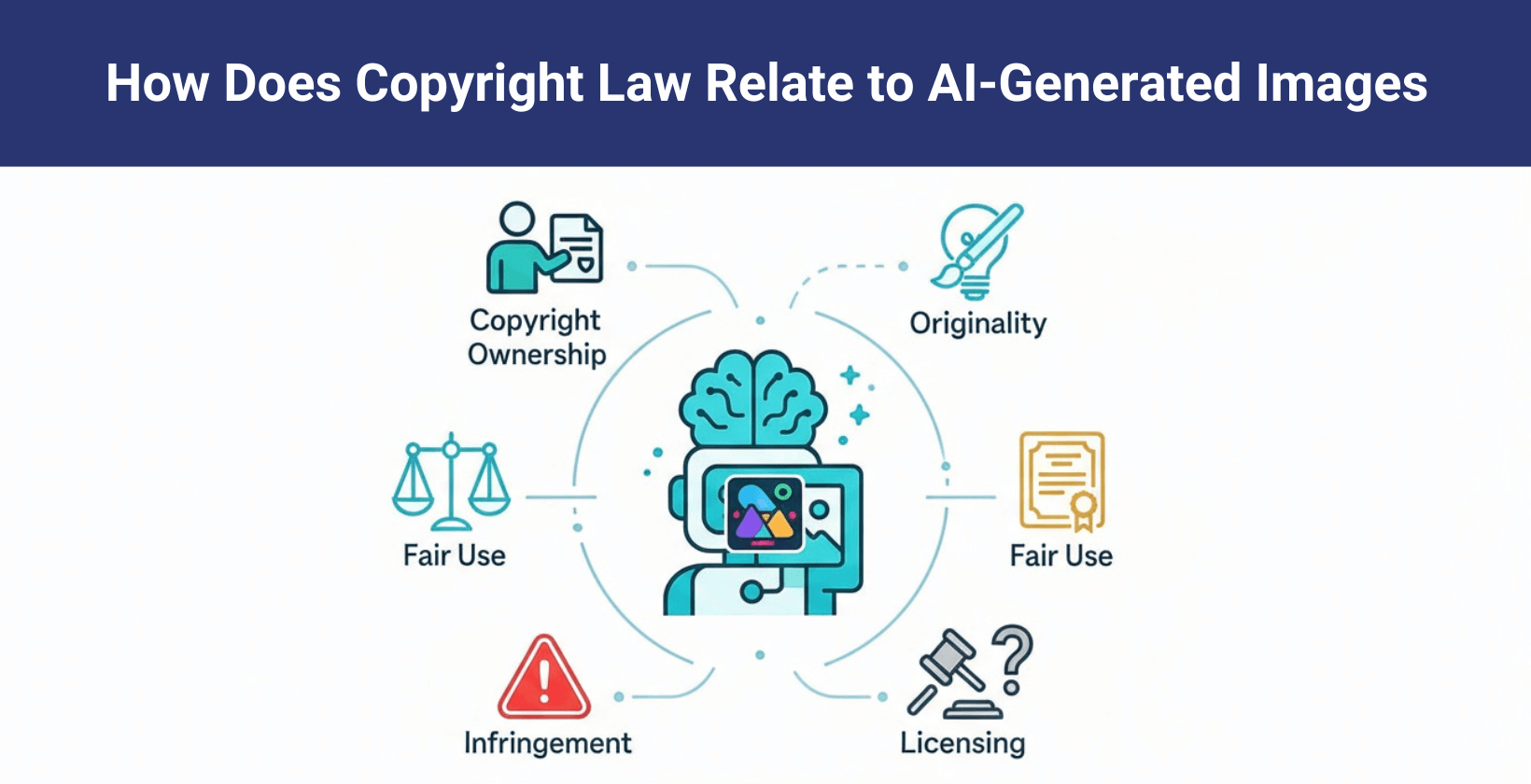
How the copyright law relates to AI generated images is shown in the image below.
Why is AI ineligible for copyright?
AI generated content is ineligible for copyright because it lacks direct involvement from human authors. It fails copyright eligibility since United States law requires clear evidence of human creativity in the creation process. This ruling has shaped practices for platforms like Vosu.ai, where human prompt engineering or editing is needed to qualify outputs for copyright. The United States Copyright Office rejects AI generated works whenever submissions do not show human contribution. The United States courts, as confirmed in the Naruto v. Slater case, have held that only works created by people qualify for copyright protection. AI generated content remains outside legal coverage unless a human author directs the core expressions.
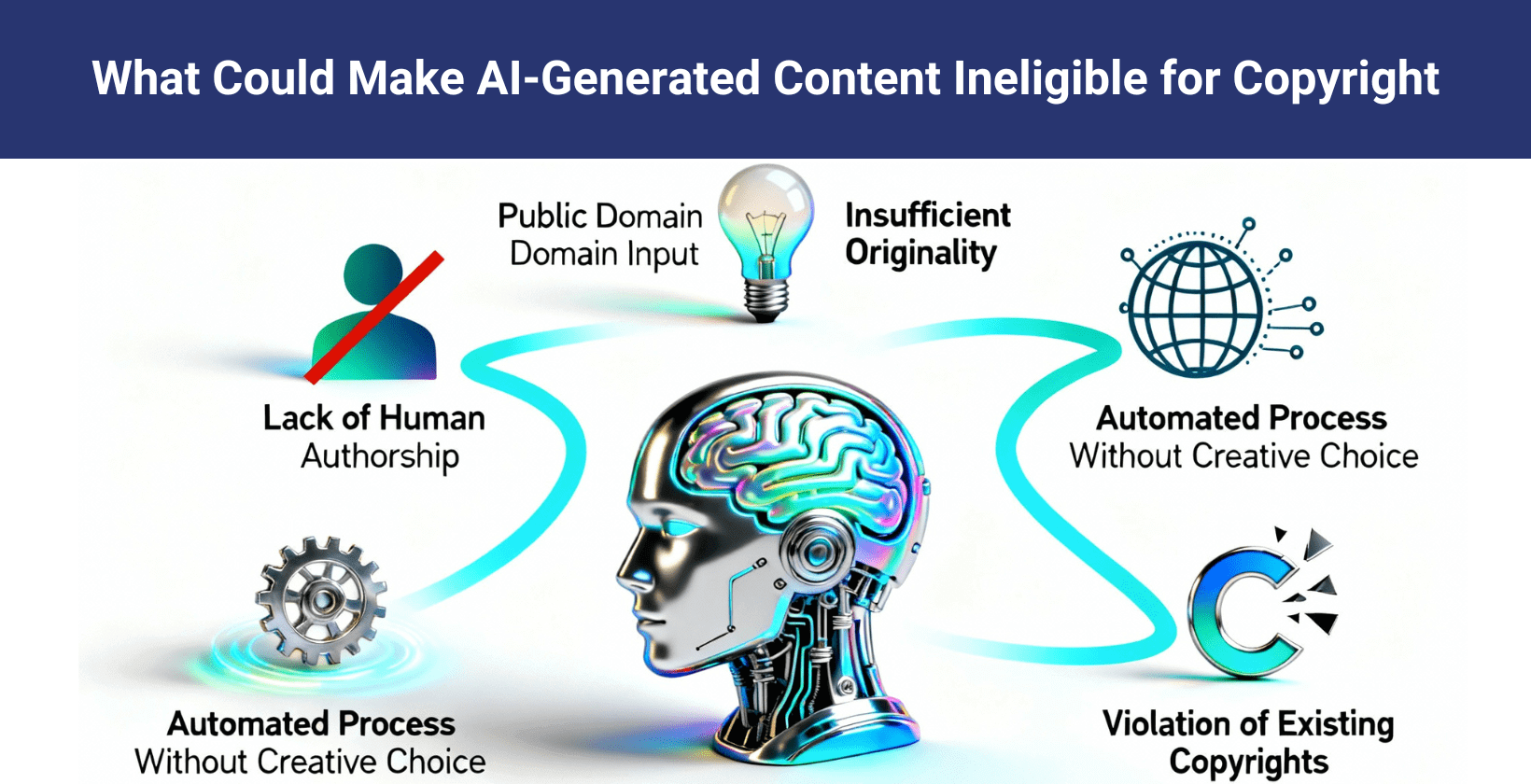
What makes AI generated content ineligible for copyright is shown in the image below.
Who owns the copyright on AI generated content?
AI generated content has no copyright owner, according to the United States Copyright Office's 2026 report. It states that copyright protection requires human authorship. AI generated content, created without human creative control, enters the public domain because of this lack of human authorship. It receives no legal copyright rights or protection under current law.
Who owns the copyright in human AI collaborations?
The copyright in human AI collaborations is owned by the human creator who contributed original authorship, according to the U.S. Copyright Office's 2026 report. AI generated content without creative human control does not qualify under current copyright protection rules since courts recognize only original works created by humans. AI generated output alone is not protected, but copyright applies when a human creator directs and shapes the final result through authorship.
What is the issue with using copyrighted data for AI model training?
The issue with using copyrighted data for AI model training is that it presents a complex legal challenge with significant debate over copyright infringement, fair use and transformative use. The U.S. Copyright Office’s 2026 report notes that training without authorization may violate the rights of the copyright owner, although some argue that it still qualifies as a transformative use. Getty Images filed lawsuits against Stability AI for unauthorized use of its photo archive, which underscores unresolved risks in current AI practices. Regulators are expected to enforce stricter consent and licensing requirements by 2026, which will provide clearer protections and compliance within the AI training ecosystem.
How to avoid copyright infringement in AI?
To avoid copyright infringement in AI, use public domain or open source data, get permission for protected works and keep clear records. Copyright knowledge should be regularly updated to stay compliant with new regulations and responsible data use should be practiced to minimize legal risks.
5 steps to avoid copyright infringement in AI are outlined below.
- Use public domain content, which carries no copyright restrictions, to safely train AI models and develop AI technology.
- Choose open source data with clear licenses that allow reuse for AI training and AI development projects. Vosu.ai offers dataset transparency for model training insights.
- Secure permission from copyright owners when using protected works for AI training, through agreements or official licensing.
- Keep detailed records of all data used to train AI models to show compliance and address potential copyright inquiries.
- Regularly review legal updates about AI copyright infringement to adapt practices to new rules and maintain responsible data use.
What are the challenges of AI and copyright?
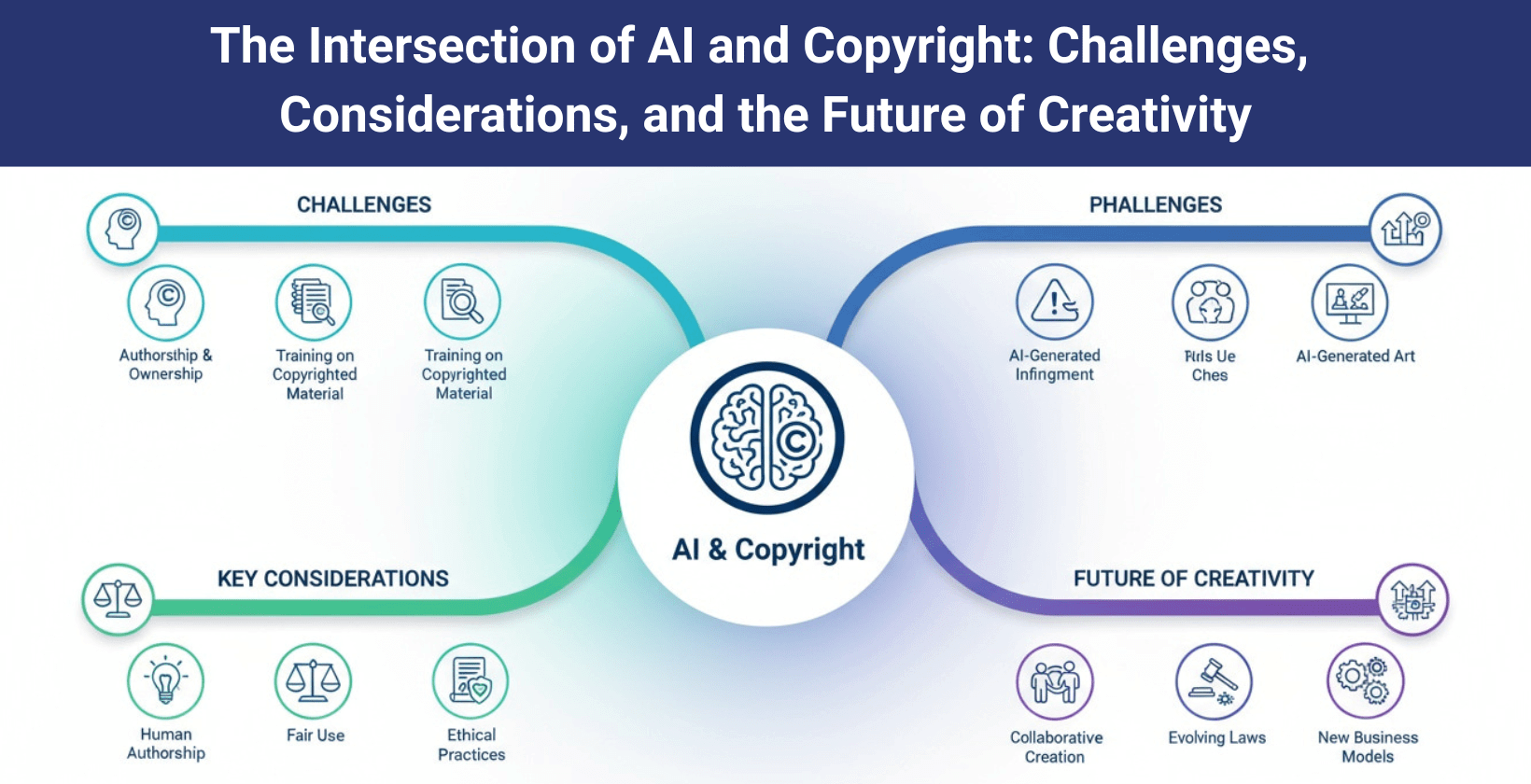
The challenges of AI and copyright include unclear authorship, copying risks and the need to balance innovation with creators’ rights. AI and copyright present complex legal, ethical and practical challenges that require careful consideration to protect creators’ rights while fostering technological innovation.
The challenges of AI and copyright are given below.
- Authorship and ownership of AI generated content: Determining copyright ownership gets complex when AI plays a central role, since copyright law requires clear human authorship to protect a work.
- Training AI models on copyrighted material: Using copyrighted material to train AI raises legal questions about consent, fair use and the responsibility to respect copyright owners’ rights.
- AI generated content and copyright infringement: Producing AI content that closely resembles protected works increases the risk of copyright infringement and makes liability and enforcement unclear.
- Balancing innovation and copyright protection: Finding the right balance between promoting new ideas through AI and respecting copyright limits is difficult as technology advances and challenges traditional approaches.
The intersection of AI and copyright is shown in the image below.
Does AI affect copyright law?
Yes, AI affects copyright law because it challenges the core principle of copyright requiring human authorship. The copyrightability of AI generated works remains unclear since current laws emphasize that only works created by humans qualify for copyright protection. This creates legal debates about the status and ownership of AI produced content. The EU AI Act addresses these challenges by introducing rules requiring AI watermarking and tracking to help protect copyrights and clarify ownership.
Is AI generated music protected by copyright?
No, AI generated music is not protected by copyright in the United States without human input. Copyright requires human creativity and authorship, which AI alone cannot provide. AI music copyright ownership faces legal challenges because current laws do not recognize machines as creators, which causes ongoing AI music copyright issues. Vosu.ai, an AI music and sound design platform, helps users add substantial human changes to confirm AI creations meet copyright eligibility requirements.
Is AI art copyrighted?
No, AI art is not copyrighted in the United States because the United States Copyright Office requires a human legal author for protection. It rejects works created solely by artificial intelligence without human input. It means AI art copyright claims lack legal standing under current rules. AI art lacks owner rights due to the absence of a legal author. Vosu.ai offers AI powered models like Runway for creating anime, avatars and digital art while encouraging users to add meaningful human controls for copyright eligibility.
Are AI generated images copyrighted?
No, AI generated images are not copyrighted because the U.S. Copyright Act requires a human author for works to be copyrightable. These creations lack the originality tied to human creativity, so AI images copyright is generally denied. Vosu.ai offers AI powered models like text-to-image and style transfer that encourage users to add input for stronger copyright eligibility.
Can AI videos be copyrighted?
No, AI videos cannot be copyrighted because the U.S. Copyright Office requires human authorship for any work to qualify for protection. An AI generated video without meaningful human input is not considered original or protected. Vosu.ai use is eligible for copyright since it allows users to add creativity and control that make works copyrightable.
Can AI designs be copyrighted?
No, AI designs cannot be copyrighted without human creative input. They lack the original authorship required by copyright law. AI designs do not qualify as creative works on their own. They rely on algorithms, not human originality, so they fall outside copyright protection.
Should data used to train AI be considered intellectual property?
No, data should not be used to train AI to be considered intellectual property, as it falls outside current laws that protect creative works. They focus on original creations, not raw data used for training generative AI. Generative AI training relies on vast datasets sourced legally or publicly. They require clear rules to balance innovation and rights.
What is the future of AI and copyright?
The future of AI and copyright is defined by evolving legal standards and collaboration between human authors and AI technologies. The United States Copyright Office’s 2026 report and WIPO discussions predict that by 2030, frameworks will classify AI human collaborations as joint works, create licensing markets for AI model training data and mandate watermarking of synthetic media. Human control over AI outputs and strong copyright protection will continue to guide new legislation.